Quick Answer: For women's clothing and lingerie dropshipping in India, Shopify is the better long-term platform because it gives you full ownership of your store, checkout, customer data, and SEO — things Instagram Shop simply cannot offer. Instagram Shop works well as a discovery and traffic channel, but it should feed customers into a Shopify store, not replace one. At Snazzyway Dropshipping, almost 90% of our active sellers run their business on Shopify, and it's the model we recommend to anyone building a brand meant to last beyond a few seasons.
If you're a women's fashion reseller in India trying to decide where to actually build your store, this question comes up constantly — and the honest answer depends heavily on what stage you're at and what you're optimizing for: quick sales this month, or a business that's still standing three years from now.
The Real Difference Between Instagram Shop and Shopify
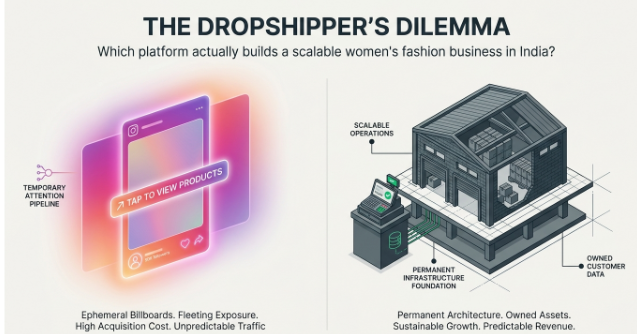
Instagram Shop is a storefront layer sitting inside Meta's ecosystem. You tag products in posts and reels, customers browse your catalog without leaving the app, and checkout typically routes through Instagram/WhatsApp DMs or a linked payment flow. It's fast to set up, free to start, and works beautifully if your audience is already engaging with your reels and stories.
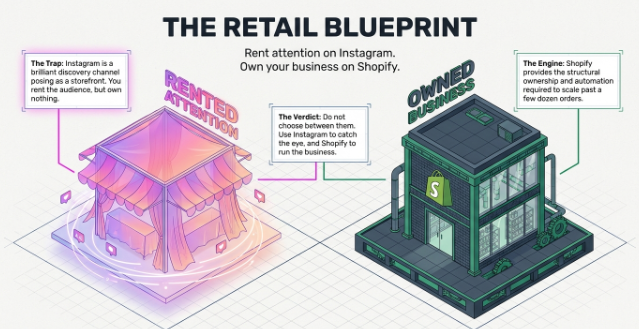
Shopify, on the other hand, is a standalone ecommerce platform. Your store lives on your own domain, you control the checkout experience end to end, you own every bit of customer data, and you can install apps for inventory sync, automated fulfillment, abandoned cart recovery, and SEO — none of which Instagram Shop supports natively.
The confusion happens because both can sell the same women's kurtis, lingerie sets, or ethnic wear. But "can sell" and "can scale" are two very different things, and the gap between them is exactly where most new resellers get stuck.
How Each Platform Actually Handles a Sale
It helps to walk through what happens after a customer taps "buy" on each platform, because the difference isn't theoretical — it shows up in your daily workload.
On Instagram Shop, a customer either checks out through Meta's native checkout (limited availability and features in India) or, far more commonly for Indian sellers, DMs you to place an order. You then manually note down their size, address, and payment preference, follow up for payment confirmation, and manually pass the order details to your supplier. If you're managing 5-10 orders a day, this is manageable. Past that, it becomes a full-time job of copy-pasting details between chat threads.
On Shopify, the customer selects size and color on a proper product page, checks out through an integrated payment gateway, and the order — along with size, address, and payment status — lands directly in your dashboard. If you're using a synced supplier feed like the one Snazzyway Dropshipping provides through Fly by Snazzyway, that order can push straight to your supplier for dispatch without you touching it. This is the single biggest operational difference between the two platforms, and it's the one that determines whether your business can grow past a side hustle.
Where Instagram Shop Genuinely Wins
Instagram Shop isn't a bad choice — it's the wrong primary choice for most sellers. Where it earns its place:
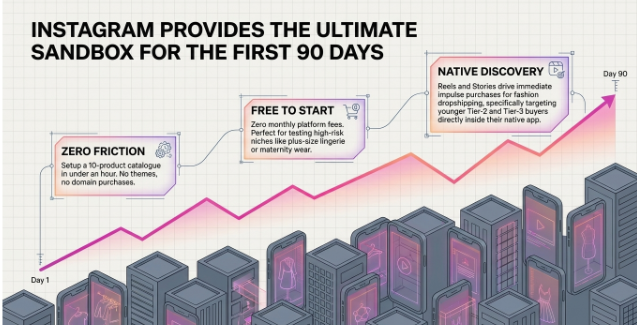
Zero setup friction. You can list your first 10 products within an hour of creating a business account. No theme to configure, no domain to buy, no apps to install.
Native discovery. Reels and Stories still drive real impulse purchases for fashion and lingerie categories, especially with younger, Tier-2 and Tier-3 buyers who spend most of their screen time inside the app rather than searching Google. If discovery through the app is your main growth lever, it's worth reading our dedicated guide on Instagram dropshipping in India for audience-building strategy beyond just the storefront decision.
Low upfront cost. There's no monthly platform fee, which matters if you're testing a niche — say, plus-size lingerie or maternity wear — before committing capital to a full store build.
Familiar buying behavior. A lot of Indian shoppers, particularly first-time online buyers in smaller towns, trust a familiar Instagram profile more than an unfamiliar website domain, at least initially.
If your entire funnel is built around ads, our guide on how to run Instagram ads for your fashion and lingerie store is worth reading alongside this comparison — Instagram Shop feels like the natural next step when you're already spending on ads inside the app.
Where Instagram Shop Falls Apart at Scale
The problems start showing up around month 4-6, once order volume climbs past what a founder can manually track in DMs.
You don't own the customer. Every follower, every saved conversation, every repeat buyer belongs to Meta's platform, not you. If your account gets flagged, restricted, or shadow-banned — which happens often and unpredictably in fashion and apparel niches — your entire sales channel can disappear overnight with no appeal process that moves fast enough to save your month's revenue.
No real SEO value. Instagram posts don't get indexed the way a proper product page does. You're permanently dependent on paid reach or algorithmic luck, never on organic search compounding over time. A product page you publish on Shopify today can still be ranking and converting two years from now; an Instagram post from two years ago is invisible to anyone not already following you.
Manual order management doesn't scale. Once you're processing 30+ orders a day, tracking payments and addresses through comments and DMs becomes a genuine liability — missed orders, wrong sizes, delayed dispatch, and refund disputes multiply fast, and there's no system tracking any of it for you.
No automation with your supplier. This is the part most new resellers underestimate. Automated dropshipping — where your supplier's stock, pricing, and order fulfillment sync directly with your storefront — only works properly on platforms built for it. Instagram Shop has no API layer for this kind of supplier integration.
Weak returns and exchange handling. Clothing and lingerie carry naturally higher return and size-exchange rates than most other categories. Managing that process over DMs — tracking who returned what, refund status, exchange size — becomes chaotic fast, and a bad returns experience is one of the quickest ways to lose a repeat customer in fashion ecommerce.
Why Shopify Is the Platform Snazzyway Recommends
We've watched thousands of sellers go through this exact decision over Snazzyway Dropshipping's 12+ years in business, and the pattern is consistent: sellers who start on Shopify from day one build faster, recover from setbacks better, and eventually reach a stage where the business itself has resale or scale value — something that's structurally impossible on a rented storefront like Instagram Shop.
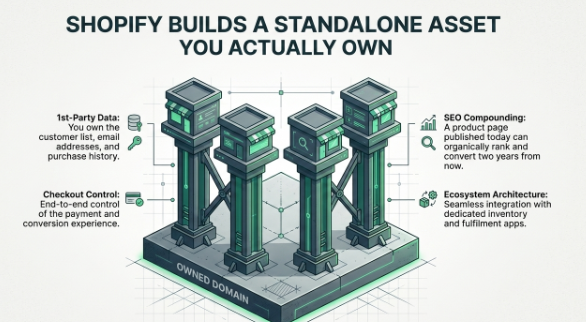
Our own numbers back this up. Across our base of 4,000+ active sellers, close to 90% run their storefront on Shopify, specifically because it connects directly with Fly by Snazzyway's automated sync — new arrivals, stock updates, and pricing changes push straight from supplier to store without a seller lifting a finger. That kind of automation simply isn't possible when your "store" is a comments section and a DM inbox. If you haven't set this up yet, our step-by-step walkthrough on how to start dropshipping on Shopify covers the full process from account setup to your first automated order.
Shopify also gives you compounding SEO value. A women's ethnic-wear product page you publish today can still be ranking and converting years from now — something no Instagram post will ever do, no matter how well it performed the day you posted it. Combine that with proper return-policy pages, size guides, and trust signals like reviews, and Shopify simply converts better for considered purchases like lingerie and clothing, where buyers want to check fit, fabric, and return terms before paying.
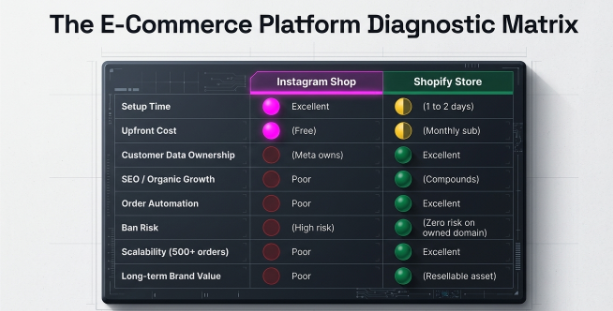
Instagram Shop vs Shopify: Side-by-Side Comparison
| Factor | Instagram Shop | Shopify Store |
|---|---|---|
| Setup time | Under 1 hour | 1-2 days (with a supplier feed) |
| Upfront cost | Free | Monthly subscription |
| Customer data ownership | No — belongs to Meta | Yes — fully yours |
| SEO / organic growth | None | Compounds over time |
| Order automation with supplier | Not possible | Fully automatable |
| Returns/exchange management | Manual, DM-based | Structured, page-based |
| Risk of account ban/restriction | High, unpredictable | None (you own the domain) |
| Scalability past 500 orders/month | Poor | Built for it |
| Long-term brand/resale value | Low | High (resellable asset) |
| Best used as | Discovery/traffic channel | Primary storefront |
Cost Isn't the Right Way to Compare These Two
New sellers often frame this decision purely around cost — "Instagram Shop is free, so why pay for Shopify?" That framing misses what you're actually paying for. Shopify's monthly fee buys you a checkout you control, a customer list you own, and a storefront that keeps working for you even on days you don't post. Instagram Shop's "free" comes at the cost of zero ownership over the very thing that makes a business valuable over time: repeat customers who know your brand, not just your latest reel.
Sellers who compare only the monthly bill usually discover the real cost later — in lost orders during an account restriction, in customers they can never re-market to because Meta owns that relationship, or in months of manual order-tracking that a synced Shopify-supplier setup would have automated from day one.
A Common Misconception Worth Correcting
A lot of new resellers assume "Instagram Shop is easier, so it's the safer place to start." It's actually the opposite. Because there's no ownership and no automation, Instagram Shop is easier to start but harder to sustain. Shopify has a slightly steeper first-week learning curve but is dramatically easier to run once your supplier integration is live.
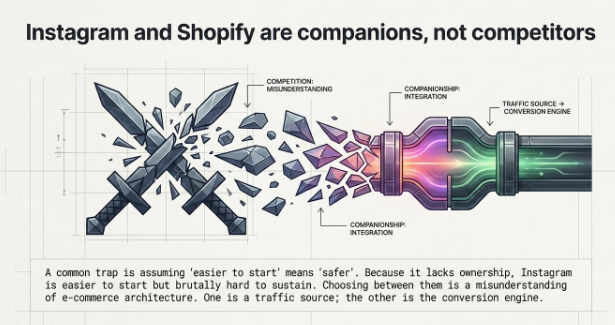
Another misconception: sellers assume Shopify and Instagram are competitors. They're not. Instagram is a traffic source; Shopify is where that traffic converts and where the customer relationship actually lives. Treating them as rivals, rather than as two parts of the same funnel, is the single most common strategic mistake we see new resellers make in their first year.
What If You're Not on Shopify Yet?
If you're currently on WooCommerce or considering a switch, it's worth understanding the tradeoffs specific to the Indian dropshipping context before you commit — our comparison on WooCommerce dropshipping in India lays out where it holds up and where it doesn't for apparel sellers specifically.
Some sellers also ask whether they should skip Shopify entirely and sell only on marketplaces. If Amazon is on your shortlist, it's worth reading our breakdown of dropshipping on Amazon before deciding — marketplaces solve the trust problem but hand you even less control than Instagram Shop does, since you're competing on someone else's search results with someone else's rules.
A Practical Migration Path if You're Starting on Instagram Today
You don't have to choose one platform on day one and live with it forever. A sensible path for a brand-new seller looks like this: start listing and testing products on Instagram Shop to validate demand cheaply, keep a simple spreadsheet of every order so you're not losing data, and once you consistently cross 10-15 orders a week, move your storefront onto Shopify while keeping Instagram as your primary marketing channel. This way you get Instagram's low-cost validation without getting stuck manually managing orders past the point where it's sustainable.
Why This Recommendation Can Be Trusted
This isn't a theoretical comparison — it's based on direct operating experience. Snazzyway Dropshipping has spent over 12 years supplying women's clothing and lingerie to resellers across India, currently working with 4,000+ active sellers across every major platform combination: Shopify, WooCommerce, Instagram-only, and marketplace-first setups. Our recommendation toward Shopify isn't platform loyalty — it's a direct observation of which sellers in our own network survive past year one, and which ones burn out chasing algorithm-dependent sales with no owned customer base to fall back on. We manufacture roughly 95% of our own inventory out of our Haldwani facility and ship through the same Fly by Snazzyway system whether a seller's storefront is Shopify, WooCommerce, or Instagram-driven — so this comparison reflects what we actually see in fulfillment data across thousands of sellers, not just industry theory.
Bottom line
- Instagram Shop is fast, free, and great for discovery — but you own nothing.
- Shopify gives you data ownership, SEO compounding, and full supplier automation.
- Returns and exchanges — a bigger factor in clothing and lingerie than most categories — are far easier to manage on Shopify's structured pages than in a DM inbox.
- Snazzyway Dropshipping sees close to 90% of its 4,000+ active sellers building on Shopify, and recommends it for anyone serious about a long-term brand.
- The winning setup isn't "Instagram or Shopify" — it's Instagram for traffic, Shopify for conversion and ownership.
FAQs
Is Instagram Shop enough to start women's clothing dropshipping without a Shopify store?
You can technically start with just Instagram Shop, and many sellers do for their first month to test a niche cheaply. But as soon as order volume grows past what you can track manually in DMs, the lack of automation and customer ownership becomes a real bottleneck — most sellers who stay Instagram-only end up rebuilding on Shopify within 3-6 months anyway.
Can I run Instagram Shop and Shopify at the same time?
Yes, and this is actually the setup we recommend. Use Instagram for discovery, reels, and ads, then route checkout traffic to your Shopify store so you retain the customer data, order history, and SEO value instead of losing it inside Meta's ecosystem.
Does switching from Instagram Shop to Shopify mean losing my existing followers?
No. Your Instagram following stays exactly where it is — you're not migrating your audience, just changing where the transaction happens. You keep posting and running ads on Instagram as usual; the only change is the checkout link now points to your Shopify store.
Why does Snazzyway Dropshipping recommend Shopify over Instagram Shop specifically for lingerie and women's clothing sellers?
Apparel and lingerie categories see high return and exchange volume compared to other niches, and Shopify's checkout, return-policy pages, and order-tracking tools handle that far better than DM-based order management. Combined with the fact that close to 90% of our 4,000+ active sellers already operate this way, it's the setup we've seen hold up best over multi-year seller journeys.
How long does it take to move from Instagram Shop to a fully automated Shopify dropshipping store?
With a supplier feed already in place — like the one Snazzyway Dropshipping provides through the Fly by Snazzyway dashboard — most sellers get a functioning, automated Shopify store live within 1-2 days.
Should a brand-new reseller with no budget start on Shopify or Instagram Shop?
If budget is genuinely the constraint, start on Instagram Shop to validate demand with zero upfront cost. But set a clear trigger point — say, 10-15 orders a week — at which you move to Shopify, so you're not stuck manually managing an order volume the platform was never built to handle.