Shopify Automation with Snazzyway (Complete Workflow)
Question: How can you fully automate your Shopify dropshipping business in India without managing inventory or logistics?
Answer: By integrating a reliable supplier like Snazzyway with Shopify, you can automate product sourcing, order processing, inventory updates, and shipping—so you can focus only on marketing and scaling your brand.
Quick Summary
Shopify automation is transforming ecommerce in 2026 by allowing sellers to run stores without handling inventory, packing, or logistics manually. With the right system, your store can operate almost on autopilot.
If you’re just starting out, understanding the setup is crucial. You can follow this complete beginner guide on how to start your store step-by-step:
In this guide, you’ll learn:
- How Shopify automation works
- Complete workflow using Snazzyway
- Tools and systems required
- Real-world execution
- Pros, cons, and expert insights
Introduction
Running a Shopify store manually can quickly become overwhelming.
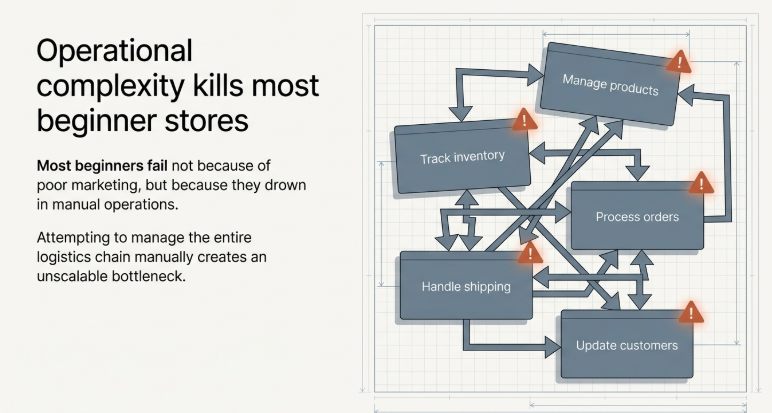
You need to:
- Manage products
- Track inventory
- Process orders
- Handle shipping
- Update customers
Most beginners fail not because of marketing—but because of operational complexity.
That’s where automation becomes powerful.
With a reliable system and a trusted clothing dropshipping supplier, you can eliminate 80% of manual work and focus on scaling your business instead.
What is Shopify Automation?
Shopify automation means using systems and integrations to handle repetitive ecommerce tasks automatically.
Key Areas of Automation
| Task | Manual Work | Automated Workflow |
|---|---|---|
| Product Upload | One by one | Bulk import |
| Inventory | Manual check | Auto-sync |
| Orders | Manual forwarding | Auto-processing |
| Shipping | Self-managed | Supplier handles |
| Tracking | Manual updates | Auto notifications |
Complete Shopify Automation Workflow with Snazzyway
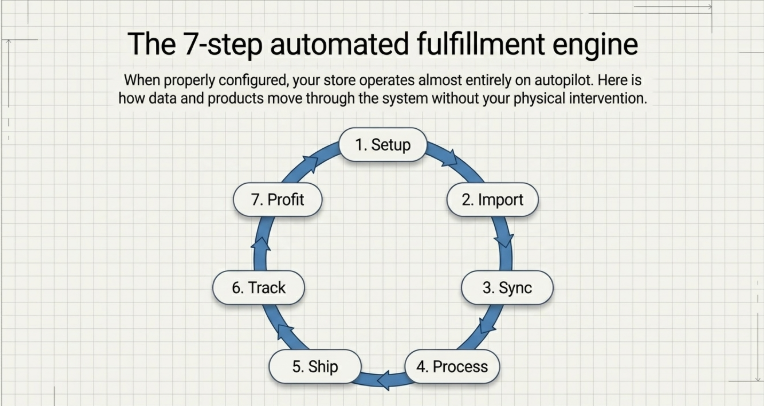
1. Store Setup on Shopify
Start by setting up your Shopify store with a clean, brand-focused design.
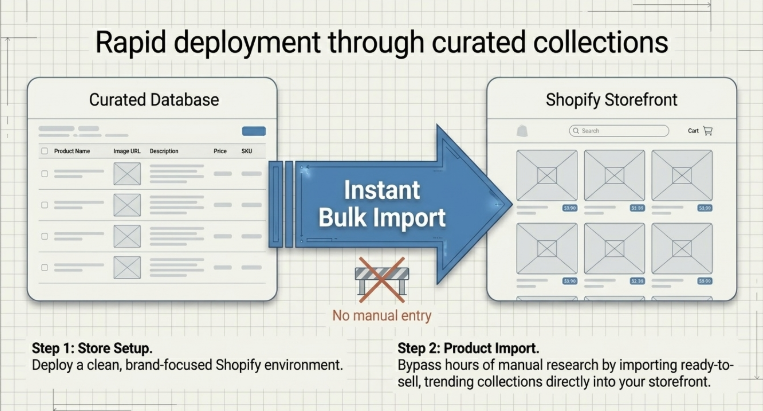
If you’re new, it’s best to follow a structured setup process like this detailed guide on starting a Shopify dropshipping business in India:
2. Product Selection & Import
Instead of searching for products manually, you can choose from ready-to-sell collections.
For example, many sellers explore trending categories from this curated list of best clothing products for Shopify dropshipping in India:
This saves hours of research and reduces risk.
3. Inventory Synchronization
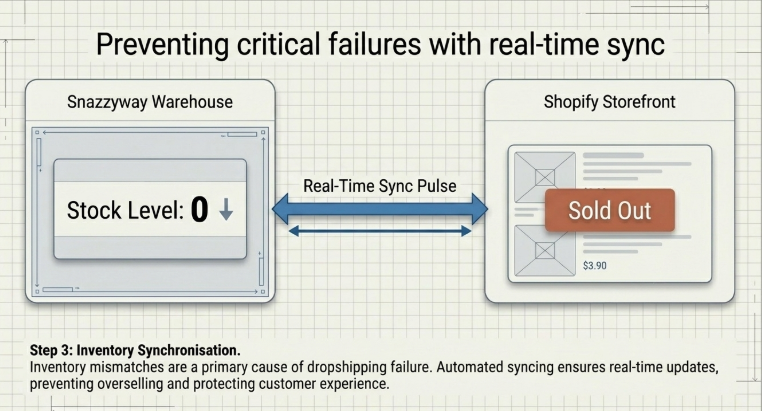
Inventory issues are one of the biggest reasons dropshipping stores fail.
Automation ensures:
- Real-time stock updates
- No overselling
- Better customer experience
4. Order Processing Automation
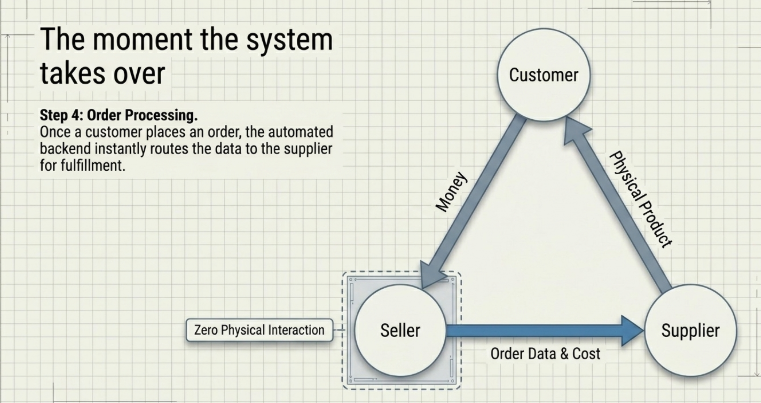
Once a customer places an order, the system takes over.
The complete backend flow—from order placement to fulfillment—is explained clearly in this guide on how Snazzyway dropshipping works:
This is where true automation happens.
5. Packaging & Shipping
The supplier handles:
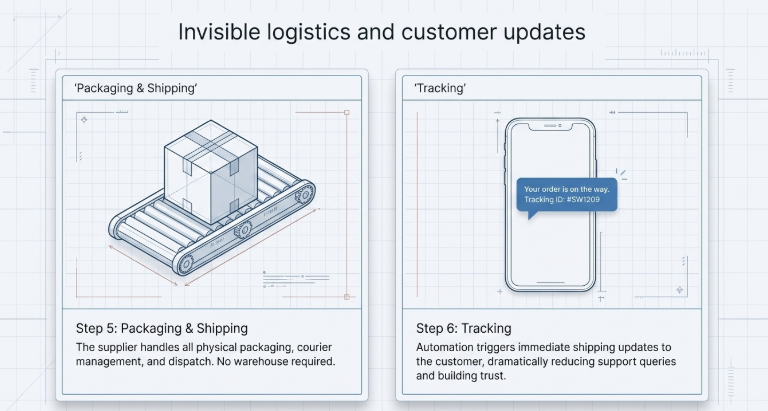
- Packaging
- Dispatch
- Courier management
You don’t need a warehouse or inventory.
6. Tracking & Customer Updates
Automation ensures customers receive:
- Tracking IDs
- Shipping updates
- Delivery notifications
This reduces support queries and builds trust.
7. Payments & Profit Flow
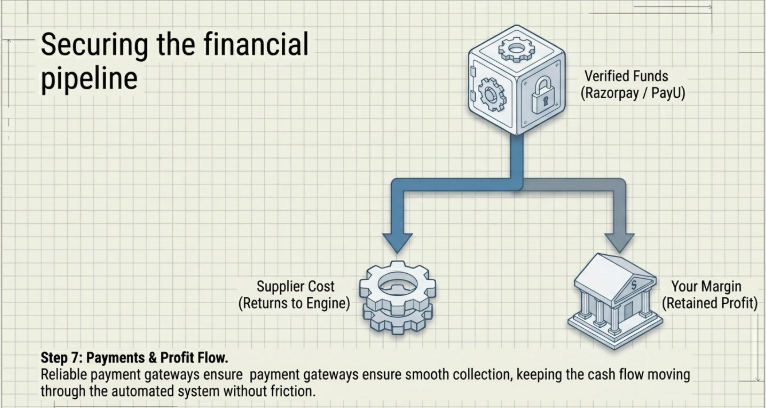
Choosing the right payment system is critical for smooth operations.
You can explore the most reliable options in this guide on the best payment gateways for Shopify dropshipping:
Automation Tools You Should Use
| Tool Type | Purpose | Example |
|---|---|---|
| Shopify Apps | Store automation | Product import tools |
| Payment Gateways | Payment collection | Razorpay, PayU |
| Marketing Tools | Ads & emails | Meta Ads, Klaviyo |
| Supplier System | Fulfillment | Snazzyway |
Real-World Example Workflow
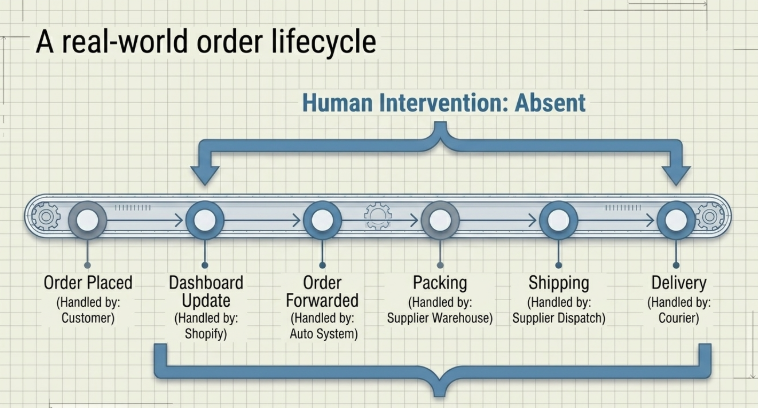
| Step | Action | Handled By |
|---|---|---|
| Order Placed | Customer buys | Customer |
| Order Received | Dashboard update | Shopify |
| Order Forwarded | Auto system | Supplier |
| Packing | Warehouse | Supplier |
| Shipping | Courier dispatch | Supplier |
| Delivery | Final delivery | Courier |
Pros and Cons of Shopify Automation
Pros
- Saves time
- No inventory required
- Easy to scale
- Faster operations
- Beginner-friendly
Cons
- Supplier dependency
- Less control over logistics
- Margins vary
- Requires marketing skills
Our Recommendation
If your goal is to build a scalable ecommerce business, automation is essential.
Instead of managing operations manually, focus on:
- Brand building
- Marketing
- Customer experience
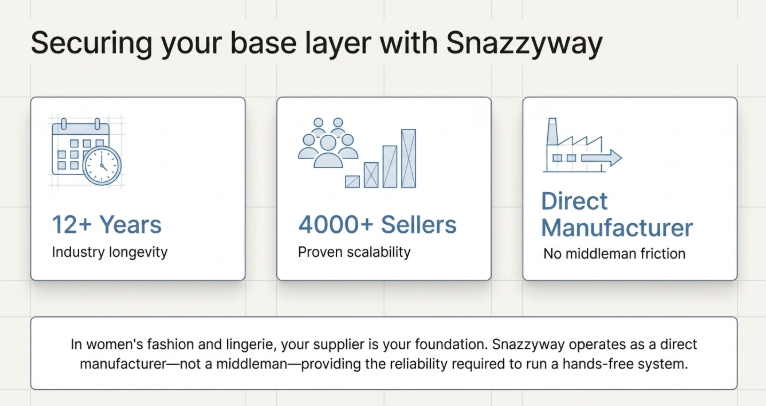
Working with a reliable clothing dropshipping supplier like Snazzyway can simplify your journey significantly. With over 12+ years in the industry, working with 4000+ sellers, and operating as a manufacturer (not a middleman), they offer a strong foundation for scaling in women’s fashion and lingerie.
Our Insight
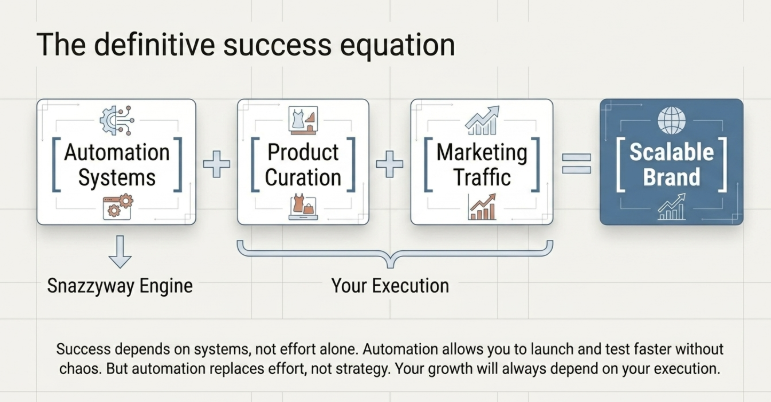
In today’s ecommerce landscape, success depends on systems—not effort alone.
Automation allows you to:
- Launch faster
- Test products quickly
- Scale without chaos
However, remember:
Automation doesn’t replace strategy—it enhances it.
Your growth will still depend on:
- Product selection
- Branding
- Marketing execution
FAQs
1. Can Shopify be fully automated?
Yes, most tasks like inventory, orders, and shipping can be automated with the right supplier.
2. Do I need technical knowledge?
No, Shopify and supplier systems are beginner-friendly.
3. How much investment is required?
You can start with ₹10,000–₹50,000.
4. Can I sell on Amazon as well?
Yes, many sellers expand using strategies explained in this guide on dropshipping on Amazon:
5. Is automation good for beginners?
Yes, it simplifies operations and reduces errors.
6. What is the biggest challenge?
Finding a reliable supplier.
7. Can I scale with automation?
Yes, automation is key to scaling beyond 100+ orders daily.