Best Payment Gateways for Shopify Dropshipping in India (2026 Guide)
Choosing the right payment gateway is one of the most important decisions for a Shopify dropshipping store in India. A good gateway improves conversion rate, supports COD + UPI, reduces payment failures, and ensures smooth settlement of your money.
This guide explains the best payment gateways for Shopify dropshipping in India , how they work, their pros & cons, and which one is best for beginners vs scaling sellers.
Why Payment Gateways Matter in Indian Dropshipping
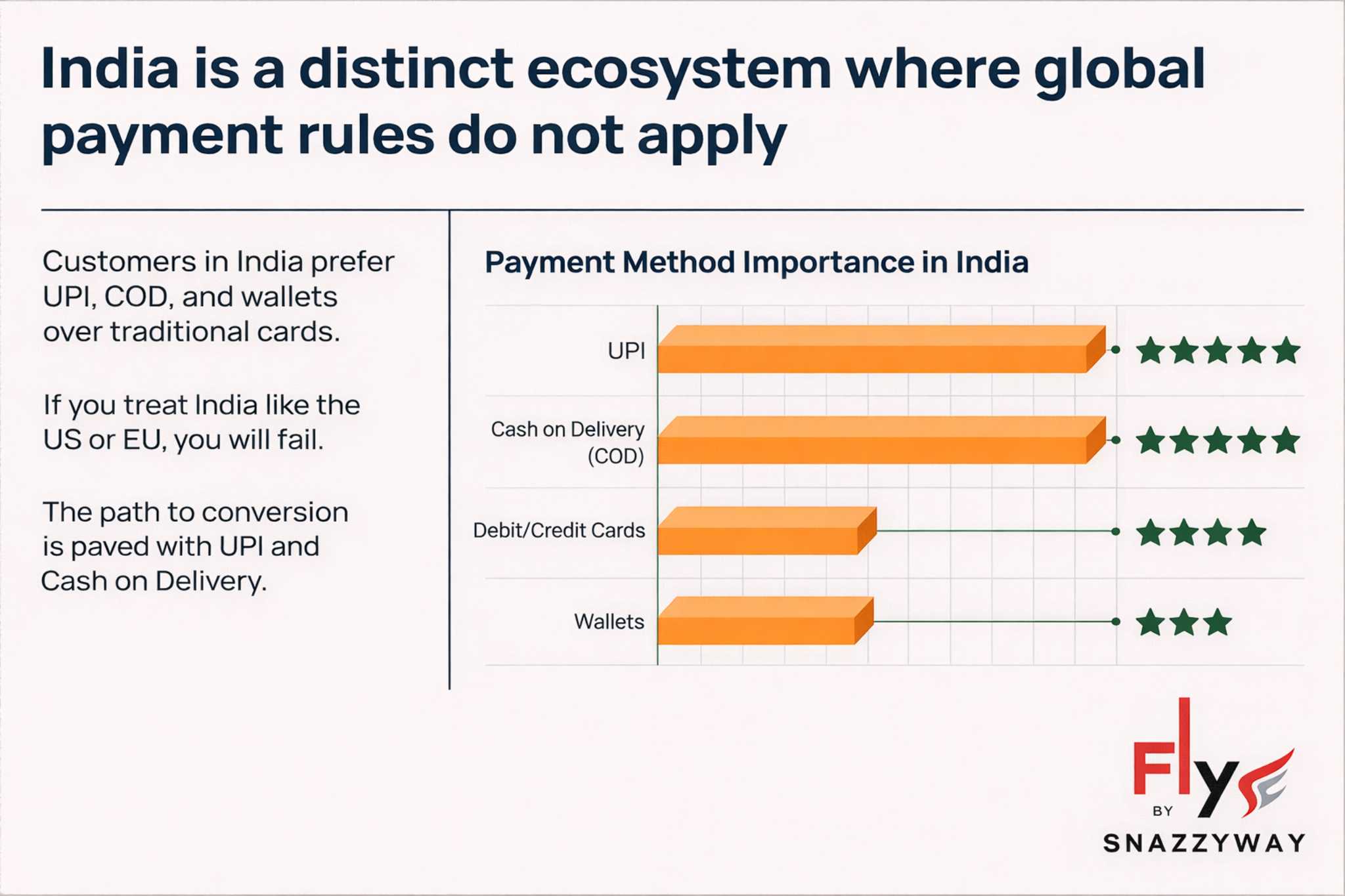
India is different from global markets. Customers here prefer UPI, COD, and wallets over cards.
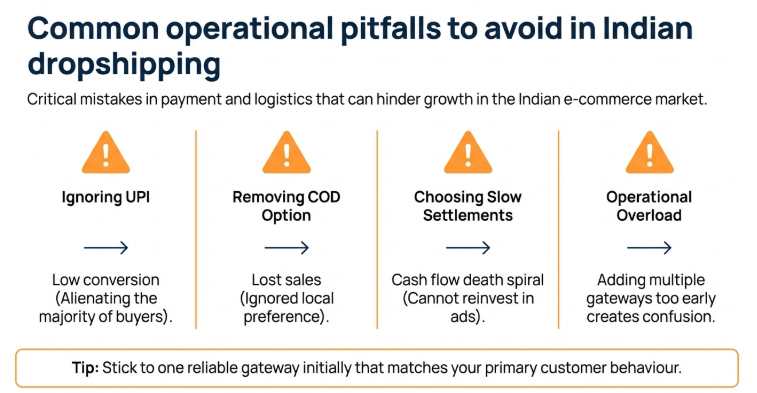
If your payment gateway is not optimised for Indian buying behaviour, it can lead to high checkout drop-offs, failed COD verification, delayed settlements, and refund or RTO issues.
This is why successful Shopify dropshippers in India focus not just on choosing a payment gateway, but on building a complete India-ready dropshipping setup , aligned with local customer behaviour and logistics realities.
What Indian Customers Prefer (Data Snapshot)
Must-Have Features in a Shopify Payment Gateway (India)
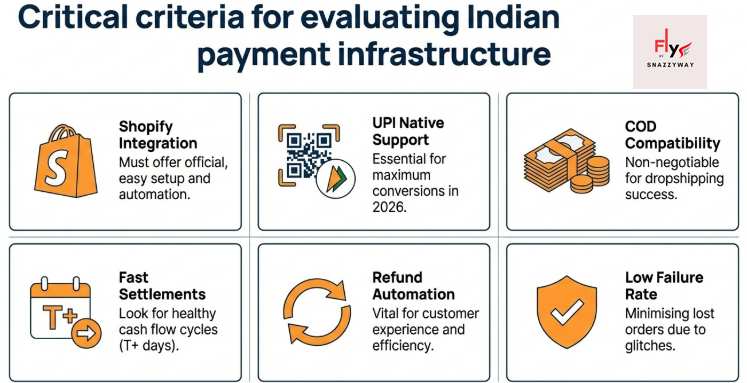
Before choosing any gateway, ensure it supports these:
Top Payment Gateways for Shopify Dropshipping in India
Comparison Table (Quick Overview)
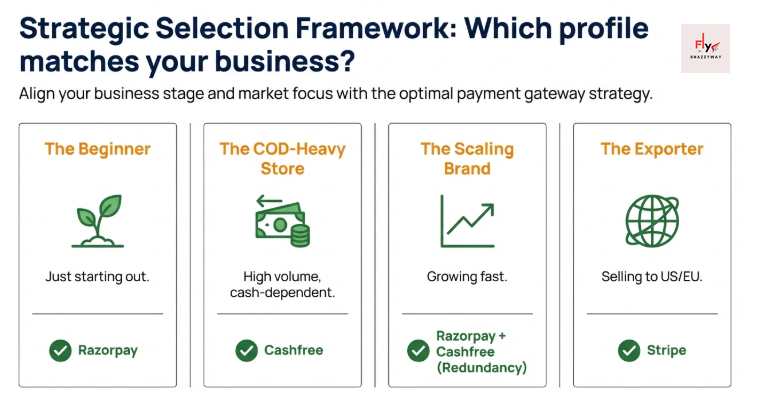
1. Razorpay – Best Overall for Shopify Dropshipping
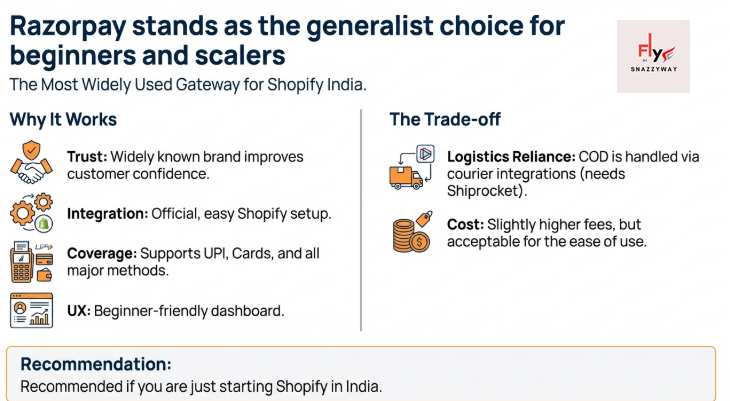
Razorpay is the most widely used payment gateway by Shopify sellers in India.
Why Razorpay Works Well
Limitations
Best for: New and mid-level dropshipping stores
Recommended if: You are just starting Shopify in India
2. Cashfree – Best for COD & Fast Settlements
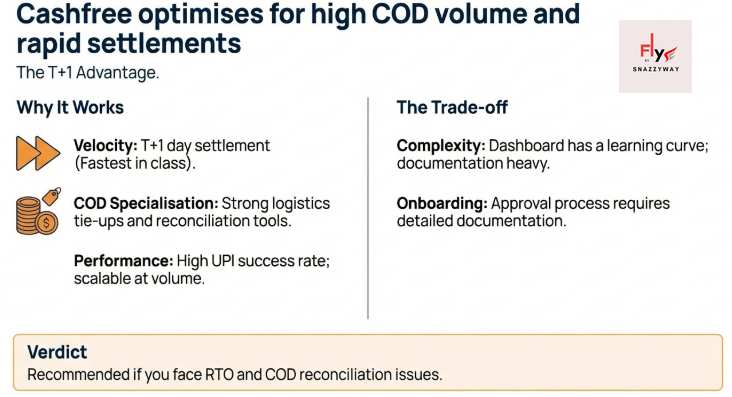
Cashfree is preferred by sellers who deal with high COD volumes.
Why Cashfree Is Popular
Limitations
Best for: COD-heavy Shopify dropshipping stores
Recommended if: You face RTO and COD reconciliation issues
3. PayU – For Established Indian Businesses
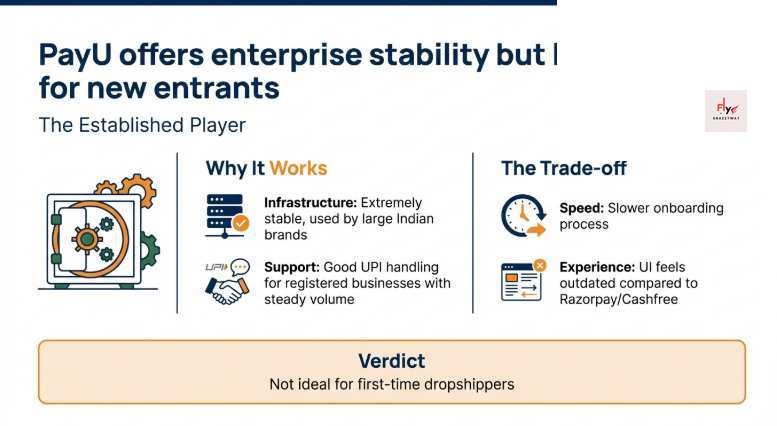
PayU is an older gateway used by many large Indian brands.
Pros & Cons
Best for: Registered businesses with steady volume
Not ideal for: First-time dropshippers
4. Stripe – Only for International Payments
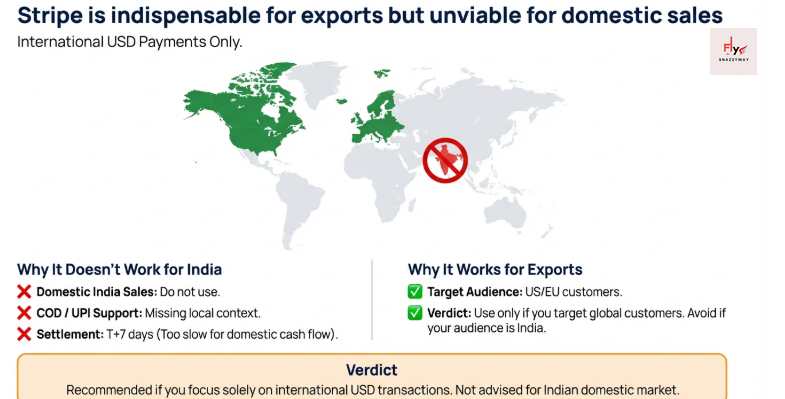
Stripe is not ideal for Indian-focused dropshipping but useful for global customers.
When Stripe Makes Sense
Use only if: You target US/EU customers
Avoid if: Your audience is India
COD in Shopify Dropshipping – Important Truth
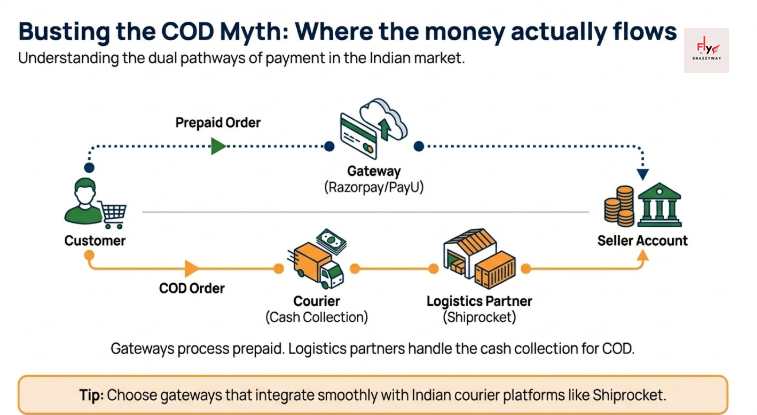
Payment gateways do not directly process COD. COD is handled by logistics partners.
How COD Actually Works
Tip: Choose gateways that integrate smoothly with Indian courier platforms.
Recommended Gateway Based on Seller Type
Common Mistakes Shopify Sellers Make (India)
Best Payment Gateways for Shopify Dropshipping in India — Frequently Asked Questions
Your Questions Answered
The best payment gateways for Shopify dropshipping in India are Razorpay and Cashfree — both support UPI, net banking, debit/credit cards, wallets, and Cash on Delivery (COD) within a single integration, which is essential for serving Indian buyers across metro and non-metro markets. Razorpay is the most widely used by Indian Shopify dropshippers due to its fast Shopify plugin setup, T+2 settlement cycle, reliable uptime, and strong fraud detection. Cashfree is preferred by sellers who prioritize faster payouts — it offers T+1 settlements — and has strong COD reconciliation tools for dropshippers handling high return-to-origin (RTO) volumes. For sellers targeting international buyers in addition to India, adding PayPal or Stripe alongside Razorpay or Cashfree covers both domestic and cross-border transactions without requiring a separate merchant account.
Setting up a payment gateway on Shopify for an Indian dropshipping store takes four steps. First, go to Shopify Admin → Settings → Payments and select "Third-party providers" — Shopify Payments is not available for Indian merchants, so Indian sellers must use a third-party gateway. Second, search for and select your gateway — Razorpay, Cashfree, PayU, or Instamojo are the most common for Indian stores. Third, create a merchant account on your chosen gateway's website and complete KYC verification — you will need your GST number, PAN, cancelled cheque or bank statement, and business registration documents. Fourth, copy your API key and secret from your gateway dashboard and paste them into the Shopify payment settings page. The integration goes live immediately after saving, and you should place a test order to confirm the checkout flow works correctly before running traffic to your store.
Razorpay and Cashfree are both strong choices for Indian Shopify dropshippers, but they differ in key ways. Razorpay offers the most complete Shopify integration — the plugin is officially listed in the Shopify App Store, supports UPI, cards, wallets, net banking, and COD, and has a settlement cycle of T+2 business days. It is the better choice for beginners due to its documentation, support quality, and reliability. Cashfree has a faster settlement cycle of T+1 and provides better COD reconciliation features — it automatically tracks COD delivery confirmation and remittance, which is valuable for dropshippers with high COD order volumes where RTO cash flow management is critical. If your store is prepaid-first and you want the fastest payout, Cashfree has the edge. If you want the most stable, well-supported Shopify integration with a complete payment suite, Razorpay is the safer default.
Payment failures and checkout abandonment in Indian Shopify dropshipping stores occur for four main reasons — and each has a specific fix. First, limited payment options: Indian buyers expect UPI, net banking, wallets, cards, and COD in a single checkout. Using a full-stack gateway like Razorpay or Cashfree that surfaces all these options simultaneously reduces abandonment from payment preference mismatch. Second, bank-level transaction declines: high-value orders from new cards trigger bank fraud filters. Adding a payment retry option in your checkout flow — where customers can try a different payment method without losing their cart — recovers 15–25% of declined transactions. Third, slow checkout loading: heavy Shopify themes with unoptimized scripts slow checkout rendering, increasing drop-off. Running Shopify's built-in speed score check and removing unused apps resolves most of these issues. Fourth, COD fake orders inflating apparent failure rates: implementing a simple OTP or WhatsApp confirmation for COD orders before dispatch reduces RTO without affecting genuine buyer experien