How to Identify Profitable Dropshipping Products ?
In the highly competitive world of dropshipping, choosing the right products can make or break your business. Identifying profitable dropshipping products is crucial for maximizing your profitability and ensuring long-term success—especially when working with best apparel sourcing platforms in India that offer reliable quality, pricing, and delivery.
Table of Contents
- How to Identify Profitable Dropshipping Products ?
- Criteria for Identifying profitable dropshipping products
- 1- Evergreen Products
- 2-Lightweight and Small
- 3-Non-Returnable Categories
- 4- Good Profit Margins
- 5- High Demand, Low Competition
- Snazzyway Insights: What Actually Works in Indian Dropshipping
- Contrarian View: Why “Trending Products” Are a Trap
- Additional Considerations for Identifying profitable dropshipping products
- Pros & Cons of Dropshipping Product Research
- Simplify Your Product Selection and Reduce Returns with Snazzyway
- Common Product Selection Mistakes to Avoid
- A Final Insight from Snazzyway
Define Your Target Market
The first step in identifying profitable dropshipping products is to understand your niche and target market. This becomes even more important if you plan to expand into dropshipping on Amazon in India , where customer expectations and competition differ from standalone stores.
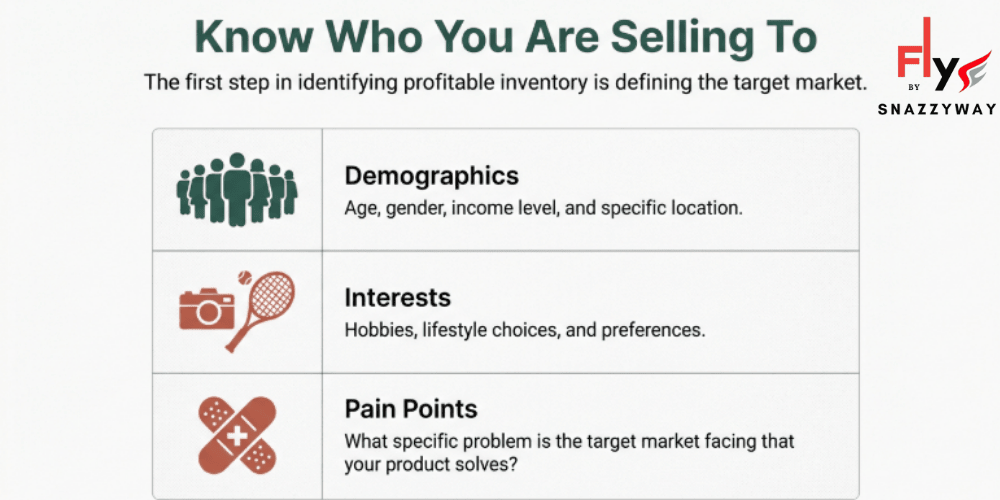
- Demographics : Age, gender, income level, and location.
- Interests : Hobbies, preferences, and lifestyle choices.
- Pain Points : Problems your target market is facing that your products can solve.
Understanding your target market is the foundation of product success, especially when you’re learning how to start dropshipping on Shopify , where product-market fit directly impacts store performance and conversions.
Criteria for Identifying profitable dropshipping products
Selecting the right products for your dropshipping business is critical to your success. By focusing on non-returnable, non-seasonal products, you can minimize returns, avoid seasonal fluctuations, and ensure a steady revenue stream—especially when evaluating the Best Clothing Products for Shopify Dropshipping in India that align with demand, logistics, and profit margins.
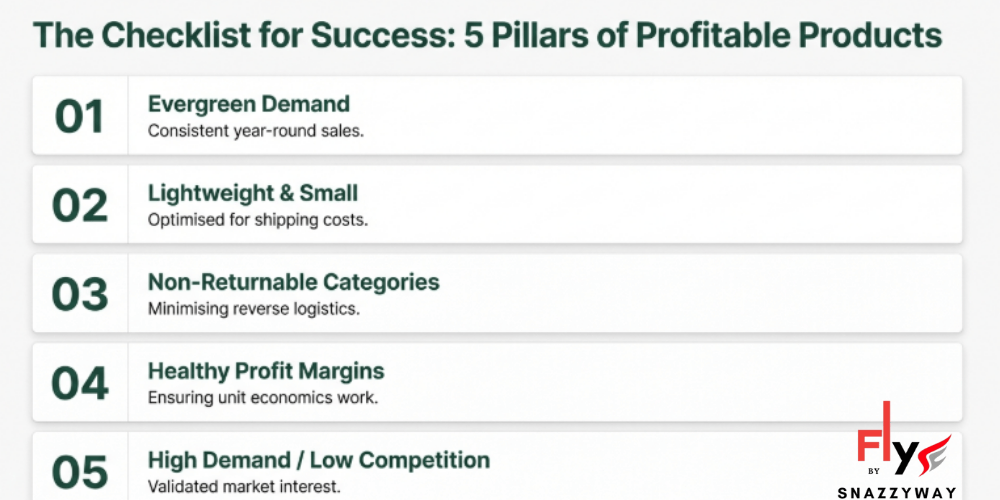
1- Evergreen Products
Evergreen products have consistent demand throughout the year, providing steady sales and revenue. Avoid seasonal items that only sell well during specific times of the year.
Consistent Demand
Evergreen products do not experience significant fluctuations in demand. This consistency allows for more predictable revenue streams and reduces the risk of unsold inventory. Examples of evergreen products include household essentials, personal care items, and tech accessories.
Year-Round Relevance
Products that remain relevant throughout the year help you avoid the pitfalls of seasonal sales cycles. This means you won’t face off-peak periods with low sales, and you can maintain a steady marketing strategy without frequent adjustments.
2-Lightweight and Small
Products that are lightweight and small are easier and cheaper to ship, reducing your overall costs. Shipping costs can significantly impact your profit margins, so choosing products that are inexpensive to ship is crucial.
Reduced Shipping Costs
Lightweight and small products incur lower shipping costs, which can be a significant advantage. This not only reduces your expenses but also allows you to offer free or discounted shipping to customers, making your products more attractive.
Lower Storage Costs
If you need to store products before shipping, smaller items take up less space and reduce storage costs. This can be particularly beneficial if you use fulfillment centers or warehouses that charge based on space used.
3-Non-Returnable Categories
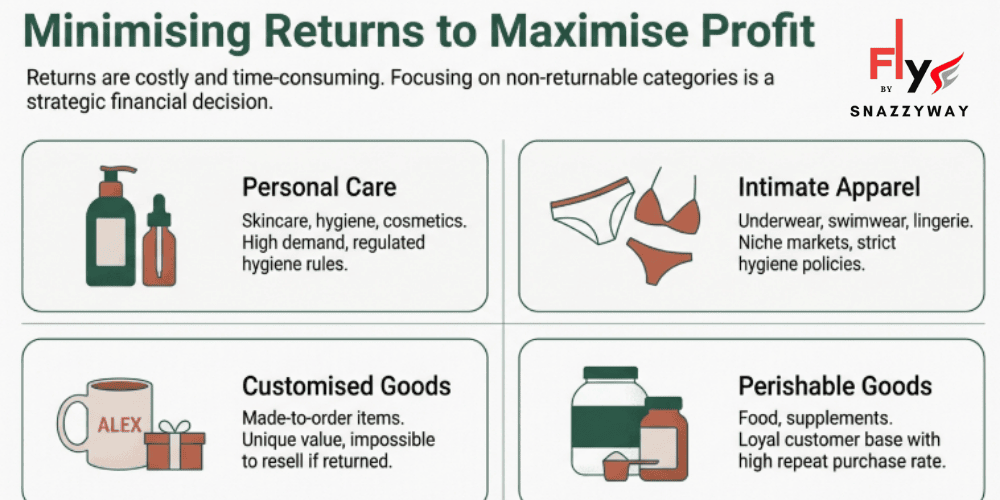
Focusing on non-returnable products minimizes returns and maximizes profits. Returns can be costly and time-consuming, so choosing products that are typically non-returnable can benefit your business.
Personal Care Items
Personal care items, such as skincare products, cosmetics, and hygiene items, are often non-returnable due to health and safety regulations. These products have a high demand and can be sold at a premium, making them an excellent choice for your dropshipping business.
Intimate Apparel
Intimate apparel, including underwear, swimwear, and lingerie, is another non-returnable category. These items are personal and often non-returnable due to hygiene reasons. They also cater to a niche market, allowing for targeted marketing strategies and potentially higher profit margins.
Custom or Personalized Products
Custom or personalized products, such as items made to order or personalized with customer names or images, are usually non-returnable. These products add a unique value proposition to your store and can command higher prices due to their personalized nature.
Perishable Goods
Perishable goods, including food items, supplements, and other consumables, are typically non-returnable. While managing these products requires careful attention to shelf life and storage conditions, they often have a loyal customer base and repeat purchases, making them a lucrative option.
4- Good Profit Margins
Ensure that the products you choose offer good profit margins. Profit margins are the difference between the cost of acquiring a product and the selling price. Higher margins mean more profit for your business.
Cost of Goods Sold (COGS)
COGS includes the cost of purchasing and shipping the product. To maximize profitability, aim to keep COGS low. This might involve negotiating better prices with suppliers or finding more cost-effective shipping options.
Selling Price
The selling price is the amount you charge customers for the product. It should be competitive yet high enough to cover your COGS and leave a healthy profit margin. Research competitors’ pricing to ensure your prices are attractive to consumers.
Profit Margin
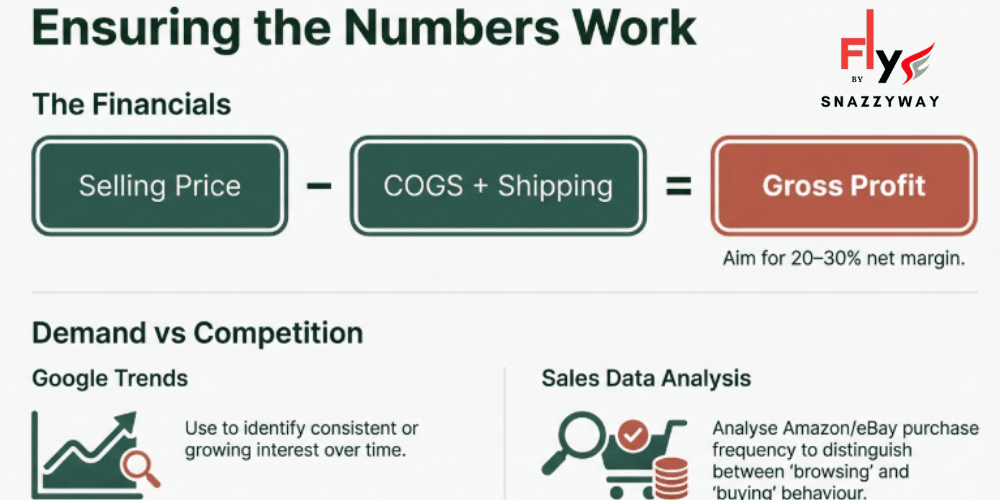
The profit margin is the difference between the selling price and COGS. Aim for products with at least a 20-30% profit margin to ensure your business remains profitable. Products with higher profit margins allow more room for marketing expenses and discounts without compromising profitability.
5- High Demand, Low Competition
The ideal product has high demand but low competition. This balance ensures there is a market for your products without excessive competition.
Google Trends
Google Trends is a valuable tool for gauging the popularity of potential products. By analyzing search data over time, you can identify which products are trending upward and which are declining. Look for products with a consistent or growing interest to ensure sustained demand.
Sales Data
Review sales data on major e-commerce platforms like Amazon and eBay to identify best-selling items. These platforms provide insights into what consumers are buying, helping you pinpoint products with high demand. Pay attention to the number of sales and the frequency of purchases to gauge demand accurately.
🔍 Snazzyway Insights: What Actually Works in Indian Dropshipping
After working hands-on with 4,000+ Indian sellers over the last 12+ years , one thing is very clear:
This experience is built on a deep understanding of how Snazzyway dropshipping works , shaped by real seller data, logistics realities, and long-term scaling patterns across India.
Profitable products are built, not discovered.
Here’s what we see consistently across successful Snazzyway sellers:
- ✅ ₹999–₹2,499 price range converts best for COD-based Indian stores
- ✅ Products with problem + visual demo outperform “trending” items
- ✅ Repeat-use products (personal care, fitness, kitchen) scale longer
- ❌ Over-hyped Facebook “winning products” often die within 30–45 days
💡 Internal Insight:
Many sellers who fail didn’t choose a bad product — they chose a product that didn’t match Indian logistics, COD behavior, or return realities.
This is why product validation before scaling matters more than virality.
🚨 Contrarian View: Why “Trending Products” Are a Trap
Everyone is chasing trending products.
But here’s the uncomfortable truth 👇
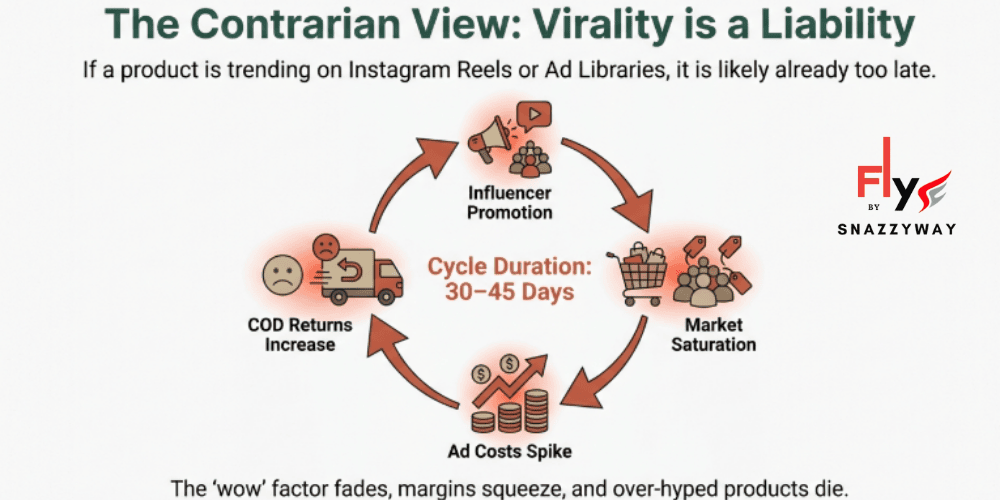
If a product is trending on YouTube or Instagram Reels, it’s probably already too late.
Instead of chasing hype, successful sellers focus on best products for dropshipping in India that show consistent demand, manageable returns, and realistic margins over time.
By the time:
- Influencers promote it
- Ad libraries show it
- Telegram groups spam it
👉 Margins are already squeezed
👉 COD returns increase, especially when sellers don’t fully understand cash on delivery in Indian dropshipping and its impact on profitability.
👉 Ad costs spike
These issues often worsen when payment flows aren’t optimized, which is why choosing the best payment gateways for Shopify dropshipping plays a critical role in reducing failed orders and improving conversion rates.
💡 What works better?
Low-noise products with:
- Clear use-case
- Stable demand
- Less visual “wow” but more daily utility
This mindset shift alone has helped many Snazzyway sellers turn average products into profitable stores.
Additional Considerations for Identifying profitable dropshipping products
Supplier Reliability
Reliable suppliers are crucial for timely order fulfillment and maintaining product quality. Evaluate suppliers based communication responsiveness, and the terms of their minimum order quantities (MOQ). A dependable dropshipping supplier ensures that you can consistently meet customer demand and maintain your business’s reputation.
Shipping Times
Fast shipping times improve customer satisfaction and reduce the likelihood of cancellations or complaints. Consider suppliers with warehouses in your target market or those offering expedited shipping options to enhance the customer experience.
Market Trends
Staying updated with market trends helps you identify new opportunities and adapt your product offerings to changing consumer preferences. Follow industry news, blogs, and use product research tools like Jungle Scout and Helium 10 to discover emerging trends and potential product ideas.
✅ Pros & ❌ Cons of Dropshipping Product Research
✅ Pros
- Low investment to test multiple products
- Access to global product catalogs
- Ability to scale fast if validation is right
- Data-driven decisions using ads & analytics
❌ Cons
- Trends burn fast if blindly followed
- COD returns can kill margins
- Supplier dependency affects delivery & quality
- Over-competition on generic products
👉 Reality Check:
Dropshipping is not about finding perfect products, but about managing risks smarter than others .
Simplify Your Product Selection and Reduce Returns with Snazzyway
When you choose to dropship with Snazzyway, you’re tapping into a system designed to enhance your business’s efficiency and profitability. Partnering with Snazzyway to offer non-returnable, non-seasonal products significantly streamlines your dropshipping business. This focus simplifies your product selection process, reducing the time spent on research and inventory updates. Non-returnable items, such as personal care products and intimate apparel, minimize the volume of returns, saving you time and money on processing and restocking. By offering evergreen products with consistent demand year-round, you avoid seasonal fluctuations, ensuring steady revenue and reducing the risk of unsold inventory.
❌ Common Product Selection Mistakes to Avoid
Snazzyway’s experience shows that slow, validated launches outperform fast, blind scaling almost every time.
A Final Insight from Snazzyway
At Snazzyway, we’ve seen dropshipping evolve over 12+ years , supporting 4,000+ sellers across India .
One lesson has remained constant throughout every trend, platform change, and algorithm update:
Products don’t fail — poor validation does.
Sellers who win long-term aren’t chasing what’s trending today.
They test patiently, understand their audience, factor in logistics and COD behavior, and scale only after proof.
If you approach product selection with validation instead of excitement, dropshipping stops feeling risky—and starts behaving like a real business.
Your Questions Answered
A product works in India if it:
- Solves a clear, everyday problem
- Falls within a COD-friendly price range
- Has manageable shipping time and low damage risk
Trend alone is not enough—logistics and buyer psychology matter more.
Yes—but mainly for early movers.
Most sellers enter too late when competition, ad costs, and returns are already high. Long-term profitability usually comes from stable-demand products rather than short viral spikes.
Based on years of seller data, products priced between ₹999 and ₹2,499 often offer the best balance of:
- Conversion rate
- COD acceptance
- Profit margin
There is no fixed number, but successful sellers usually test:
- 5–10 products with small budgets
- Validate through real orders rather than likes or views
Consistency in testing beats chasing one perfect product.
Yes. Beginners can start with:
- Google Trends
- Marketplace bestseller lists
- Customer problem research
Paid tools can help, but experience and validation matter more than software.