Indian Drop-Shipping vs. International Drop-Shipping: Which is Better?
When starting a dropshipping business, choosing the right market—and the right wholesale clothing dropshipping suppliers —is a crucial decision. Sellers must decide whether to focus on the Indian market or expand internationally, as each option comes with its own advantages and challenges. From supplier reliability and shipping speed to pricing structures and customer expectations, the choice directly impacts scalability and profitability. This comprehensive guide will help you understand both Indian and international dropshipping models and determine which approach is better suited for your business goals.
Introduction to Drop-Shipping
Drop-shipping is a retail fulfillment method where a store doesn’t keep the products it sells in stock. Instead, when a store sells a product, it purchases the item from a third party and has it shipped directly to the customer. As a result, the seller doesn’t have to handle the product directly.
Benefits of Drop-Shipping
- Low Startup Costs: Since you don’t need to invest in inventory upfront, your initial costs are significantly lower.
- Reduced Risk: You only purchase products when you have confirmed orders, reducing the risk of unsold stock.
- Wide Product Range: You can offer a diverse range of products without needing to stock them.
- Location Independence: You can run your drop-shipping business from anywhere with an internet connection.
How Does It Work?
- Customer places an order on your online store.
- The store owner forwards the order details to the supplier.
- Wide Product Range: You can offer a diverse range of products without needing to stock them.
- The supplier ships the product directly to the customer.

Indian Drop-Shipping
Advantages
Local Market Understanding:
- Cultural Insight : As an Indian seller, you have a better understanding of local tastes, preferences, and purchasing habits.
- Festivals and Seasons : You can leverage local festivals and seasons to boost sales with targeted marketing.
Payment Options:
- Cash on Delivery (COD): Many Indian customers prefer COD, which can be easily offered within the country.
Cash on Delivery (COD) in Indian dropshipping — should you offer it?
Challenges
Limited Supplier Network:
- Fewer Choices : The number of Clothing dropshipping suppliers within India might be limited compared to the international market.
- Quality Concerns : Ensuring the quality of products can be challenging without a broad supplier base.
Market Saturation:
- High Competition : The local market can be saturated with sellers offering similar products, making it harder to stand out.
Logistics and Infrastructure:
- Delivery Issues : Some regions might face logistical challenges, affecting delivery times and customer satisfaction.
International Drop-Shipping
Advantages
Global Market Reach:
- Larger Audience : Access to a global customer base can lead to higher sales volumes.
- Niche Markets : You can target specific niches using data-driven insights that might not be available in the local market.
Diverse Supplier Options:
- Wide Selection : International drop-shipping platforms like AliExpress, Oberlo, and SaleHoo offer a wide range of suppliers.
- Competitive Pricing : With more suppliers, you can find competitive pricing and better deals.
Brand Building:
- International Presence : Building an international brand can lead to higher credibility and long-term growth.
- Marketing Opportunities : You can leverage global trends and events for marketing campaigns.
Challenges
Higher Shipping Costs:
- International Shipping : Shipping products internationally can be expensive and affect profit margins.
- Customs and Duties : Handling customs and import duties can complicate the shipping process.
Longer Delivery Times:
- Shipping Delays : International shipping often takes longer, leading to potential customer dissatisfaction.
- Tracking Issues : Tracking international shipments can be more challenging.
Payment Gateways:
- Currency Conversion : Dealing with multiple currencies and payment gateways for dropshipping can add complexity.
- Fraud Prevention : Ensuring secure transactions across borders requires robust fraud prevention measures.
Key Considerations for Choosing Between Indian and International Drop-Shipping
Target Audience:
- Determine whether your products cater more to local or international customers.
Product Sourcing:
- Evaluate the availability and reliability of suppliers in India versus international suppliers.
Shipping and Delivery:
- Assess the shipping costs, delivery times, and logistics challenges for both options.
Market Competition:
- Analyze the level of competition in the Indian market versus the international market.
Legal and Regulatory Compliance:
- Understand the legal requirements for operating a drop-shipping business locally and internationally.
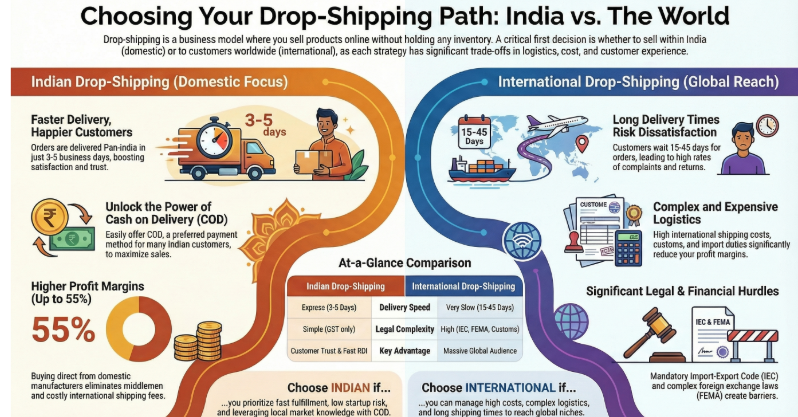
Snazzyway’s Expert View: Domestic vs. International Dropshipping
We understand the confusion when starting out. While International Dropshipping (e.g., sourcing from China) offers a massive global catalog, we strongly advocate for focusing on the Indian Domestic Market first, especially when partnered with a reliable manufacturer like Snazzyway.
Here is our breakdown of the core factors:

1. Profitability, Costs, and Margins

2. Logistics, Shipping, and Customer Experience
3. Supplier Access, Risk, and Branding

4-Returns & Refunds
The return process is where the two models diverge most sharply, directly impacting customer trust and your profit margins.

5-Legal & Tax Compliance
The legal complexity of the two models is the most significant difference, revolving primarily around GST and export requirements.
Conclusion
- Choose Indian Dropshipping if: Your priority is fast, reliable fulfillment, lower startup risk, maximizing sales through Cash on Delivery (COD), and leveraging your deep understanding of the local market.
- Choose International Dropshipping if: Your priority is access to global niche markets and maximizing total sales volume, provided you are prepared to manage the high costs, long shipping times, and complex international compliance.

Snazzyway: Your Ideal Supplier
When considering a supplier for your drop-shipping business, Snazzyway stands out as an ideal choice. Here’s why:
Wide Range of Products:
Snazzyway offers an extensive selection of high-quality products, including lingerie, swimwear, and apparel, catering to diverse customer needs.
Reliable Shipping:
With efficient logistics and reliable shipping partners, Snazzyway ensures timely delivery of products, enhancing customer satisfaction.
Quality Assurance:
Snazzyway prioritizes quality, ensuring that all products meet high standards before they are shipped to customers.
Competitive Pricing:
By offering competitive prices, Snazzyway allows you to maintain healthy profit margins while providing value to your customers.
Local and International Reach:
Whether you’re targeting the Indian market or looking to expand internationally, Snazzyway’s robust supply chain can support your business goals.
Amazon Dropshipping Solution & Shopify Integration
Snazzyway supports Amazon dropshipping through a structured supplier-led solution and offers seamless Shopify dropshipping integration, enabling smooth product sync, order processing, and inventory management. This allows sellers to operate efficiently across marketplaces and D2C stores without manual overhead.
Dedicated Support:
Snazzyway provides excellent customer support, assisting you with any queries or issues that may arise, ensuring smooth operations for your drop-shipping business.
Your Questions Answered
Dropshipping is an e-commerce business model where you sell products online without holding inventory. When a customer places an order, the supplier ships the products directly to the customer on your behalf, reducing upfront costs and risk.
The main difference lies in market focus and logistics.
- Indian dropshipping focuses on selling within India, offering lower shipping costs, faster delivery, and easier payment options like COD.
- International dropshipping targets customers globally but may involve higher shipping costs, longer delivery times, and cross-border compliance.
For many beginners, Indian dropshipping can be easier because it involves fewer logistical challenges, faster deliveries, and simpler payment processes which help build customer trust and quicker profitability.
Yes. You can sell to global customers from India by sourcing products from international suppliers and shipping worldwide. However, this requires managing international payments, customs duties, and sometimes more complex legal compliance.
Yes. To operate legally in India, especially if your annual turnover exceeds the required threshold, you typically need to register for GST and follow applicable business and tax laws.