Is Dropshipping Still Profitable in India in 2026? Real Data, Margins & Truth
Dropshipping has been one of the most talked-about online business models in India for almost a decade. Some people say it is dead. Others claim they are making lakhs every month.
So what is the real truth in 2026?
After working in the Indian eCommerce and dropshipping ecosystem for 12+ years and supporting 4,000+ active sellers through trusted fashion dropshipping suppliers across India , we’ve seen every phase — from the early easy-money days to today’s competitive, system-driven market.
This blog is not hype.
This is a real, ground-level analysis of whether dropshipping is still profitable in India in 2026, what margins actually look like, and who should (and should not) start.
If you’re new and want to understand the process clearly, here’s a simple breakdown of how Snazzyway dropshipping works .
What Is Dropshipping (Quick Recap)
Dropshipping is a business model where:
- You sell products online
- You don’t keep inventory
- When a customer orders, the 0supplier ships directly to the customer
- You earn the difference between selling price and total cost
In India, dropshipping mainly works through:
- Shopify / WooCommerce stores
- Marketplaces (selectively)
- Indian suppliers + logistics partners
Many beginners choose Shopify because of its flexibility. If you’re starting fresh, this guide explains how to start dropshipping on Shopify in India step by step .
The model itself has not changed — but the rules of the game have .
The Big Question: Is Dropshipping Still Profitable in India in 2026?
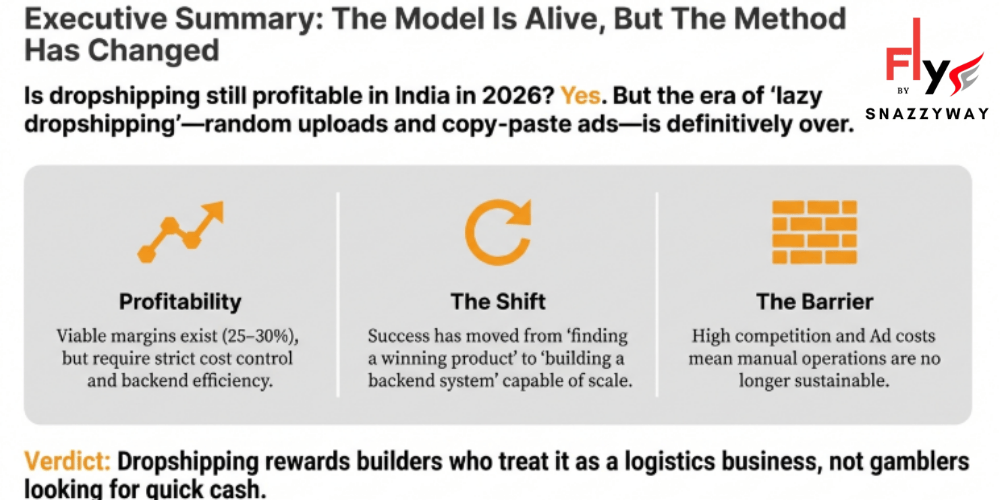
Dropshipping in India is still profitable in 2026 if you treat it like a real business, not a shortcut.
What no longer works:
- Random product uploads
- Copy-paste ads
- Fake income screenshots
- Zero customer support
- Poor suppliers
What works now:
- Data-driven product selection
- Reliable Indian suppliers
- Fast shipping + COD management
- Brand-style thinking
- Strong backend systems
Choosing the right products is just as important, and this guide shows how to identify profitable dropshipping products before spending on ads.
This is exactly where most beginners fail — and where experienced platforms like Snazzyway create an edge.
Real Dropshipping Margins in India (2026 Data)
Let’s talk numbers — not dreams.
Average Product Example (India)
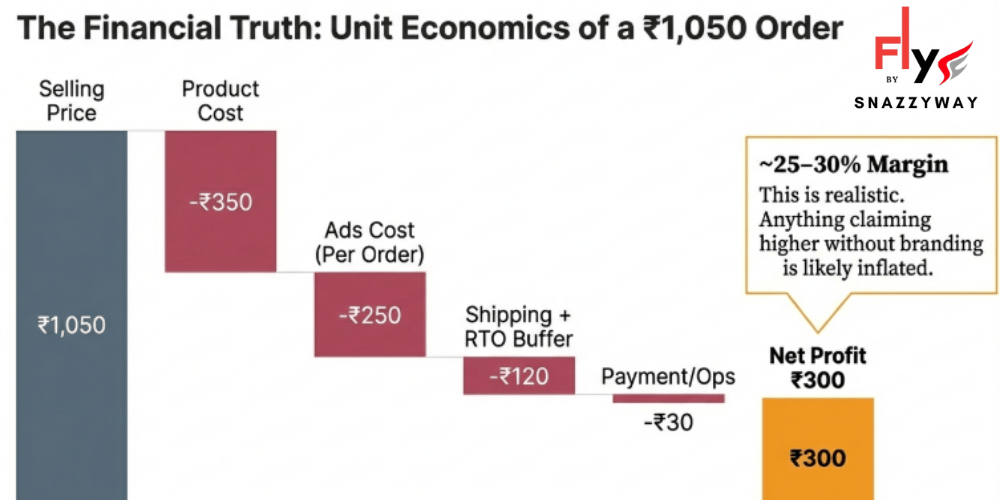
👉 Profit Margin : ~25–30%
This is realistic , not inflated.
Some niches give:
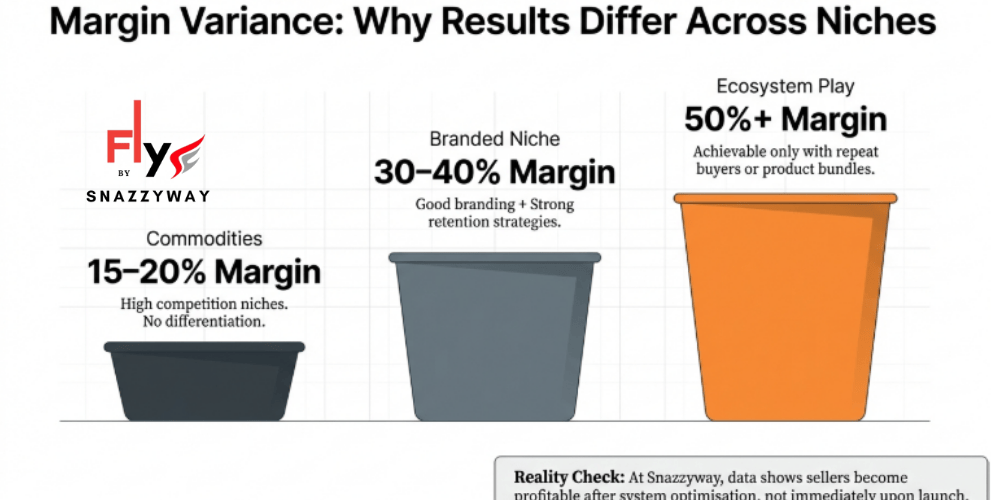
- 15–20% (high competition)
- 30–40% (good branding + retention)
- 50%+ only with repeat buyers or bundles
At Snazzyway, we see sellers become profitable after system optimization , not overnight.
If you’re specifically using Shopify, this detailed breakdown explains how much you can realistically earn from Shopify dropshipping in India.
Why Most People Think Dropshipping Is Dead
Dropshipping is not dead — lazy dropshipping is.
Here’s why many fail:
- Wrong expectations
People expect profits in 7 days. Real businesses take time.
- Poor supplier quality
Late delivery, no stock sync, high RTO = losses.
- No backend support
Manual order processing kills scale.
- Blindly copying others
Same products, same creatives, same audience.
- Ignoring Indian realities
COD, returns, trust, language, delivery timelines.
This is why sellers who work with structured platforms perform better long term.
Pros of Dropshipping in India (2026)
Let’s be clear — there are strong advantages.
1. Low Initial Investment
You don’t need:
- Warehouse
- Bulk inventory
- Big team
You can start lean and scale gradually.
2. Massive Indian eCommerce Growth
India’s online buying habit is still growing :
- Tier-2 & Tier-3 cities
- Mobile-first buyers
- Regional demand
Dropshipping fits this expansion perfectly.
3. Easy to Test Products
You can:
- Launch fast
- Kill non-performers quickly
- Scale winning products
This flexibility is gold in 2026.
4. Platform Support & Automation
Modern dropshipping platforms (like Snazzyway):
- Auto-sync products
- Auto-process orders
- Manage tracking & invoices
Smooth payments also play a big role in scaling, so choosing the best payment gateways for Shopify dropshipping can directly impact conversion rates.
This removes 70% of manual work.
Cons of Dropshipping in India (Reality Check)
Dropshipping is not magic. You must know the risks.
1. High Competition
Everyone can start — so differentiation is key.
2. RTO (Return to Origin)
COD returns are a serious cost if not managed properly.
Some sellers also worry about compliance. This guide explains dropshipping without GST in India in 2026 and when GST is actually required.
3. Ad Costs Are Higher
Facebook & Google ads are expensive compared to earlier years.
4. Thin Margins Without Strategy
Without branding, margins shrink fast.
This is why process, data, and supplier quality matter more than motivation.
What Has Changed in Dropshipping by 2026?
Here’s what is different from 2020–2023:
1. Brand > Product
Winning sellers focus on:
- Store trust
- Clean UI
- Clear policies
- Support systems
For fashion sellers, visibility matters more than ever, and these SEO tips for boosting your clothing dropshipping store’s visibility help attract organic traffic.
2. Backend Matters More Than Frontend
Order management, RTO control, analytics — this is where profits are protected.
3. Indian Suppliers Are Better Now
Faster shipping, better packaging, more SKUs — if you choose right .
This is especially true for fashion, where choosing the right products matters—here are the best clothing products for Shopify dropshipping in India .
4. Retention Is Key
Email, WhatsApp, repeat buyers = higher lifetime value.
How Snazzyway Helps Sellers Win in 2026
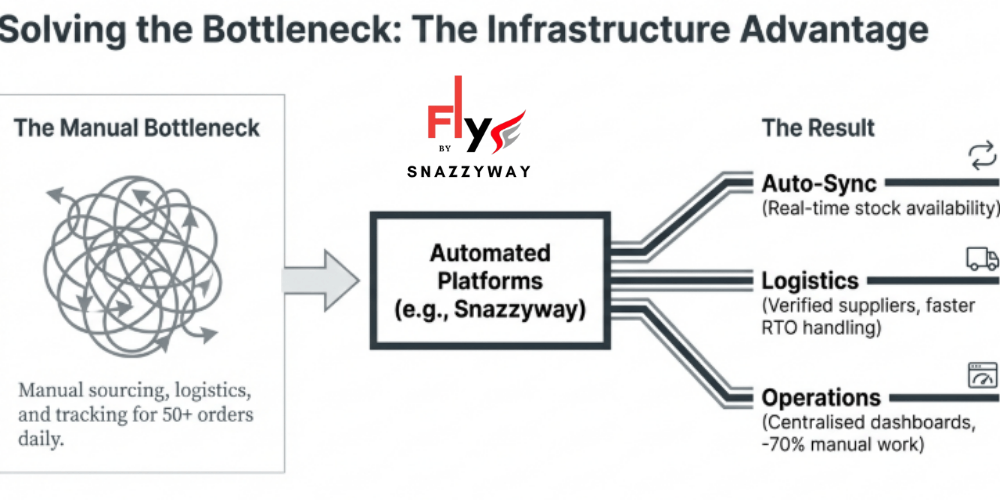
With 12+ years in the industry and 4,000+ sellers onboarded , Snazzyway understands Indian dropshipping deeply.
Here’s what experienced sellers value:
- Verified Indian suppliers
- Faster delivery & better RTO handling
- Centralized dashboard for operations
- Scalable backend tech
- Human support (not just automation)
Most beginners fail not because dropshipping is bad — but because their system is weak .
Pro Tips for Profitable Dropshipping in 2026
✅ Pro Tip 1: Start With Fewer Products
5–10 well-researched products beat 500 random listings.
✅ Pro Tip 2: Price for Reality, Not Ego
If margins don’t survive ads + returns, drop the product.
✅ Pro Tip 3: Focus on Indian Buyer Psychology
Trust, delivery time, COD clarity, simple language — this sells.
✅ Pro Tip 4: Track Every Number
RTO %, ad CPA, delivery TAT — what you don’t track will hurt you.
✅ Pro Tip 5: Think Long-Term
Real profits come from:
- Repeat customers
- Brand recall
- System efficiency
Not viral luck.
Who Should Start Dropshipping in 2026?
Good fit if you:
- Are patient
- Want to build skills
- Can reinvest profits
- Treat it like a business
Not a good fit if you:
- Want instant money
- Avoid learning ads & data
- Can’t handle failures
- Follow shortcuts
Dropshipping rewards builders , not gamblers.
Final Conclusion: Is Dropshipping Worth It in India in 2026?
Yes — dropshipping is still profitable in India in 2026 .
But only for those who:
- Use the right systems
- Work with reliable platforms
- Understand Indian market realities
- Focus on long-term growth
The era of easy money is over.
The era of smart, structured dropshipping has begun.
If you approach it with the right mindset, tools, and partners, dropshipping can still become a strong, scalable online business in India.
Your Questions Answered
Yes, dropshipping is still profitable in India in 2026 if done correctly. Sellers who use reliable Indian suppliers, control RTO, price products properly, and focus on long-term branding can still earn healthy margins. Dropshipping no longer works as a quick-money model, but it works well as a structured business.
A beginner can realistically earn ₹20,000–₹80,000 per month in the first few months if they follow the right process. With experience, better ads, and repeat customers, many sellers scale to ₹1 lakh or more per month. Results depend on product selection, ad strategy, and backend efficiency.
In 2026, the average net profit margin in Indian dropshipping typically ranges between 20% to 30%. Sellers who focus on branding, bundles, and repeat buyers can push margins higher.
Yes, dropshipping is completely legal in India. Sellers must comply with basic business requirements such as GST when applicable, proper invoicing, and consumer protection regulations.
Most dropshippers fail due to:
- Poor supplier quality
- High return-to-origin rates and slow deliveries
- Copy-paste product strategy
- Unrealistic expectations
- No backend systems
Dropshipping usually fails when it is treated as a shortcut instead of a real business.