High Ticket vs Low Ticket Clothing Dropshipping – Which Is More Profitable?

Clothing dropshipping is one of the most popular online business models in India.
But one question confuses most sellers when choosing clothing dropshipping suppliers for Indian sellers : how do you pick the right one?
In this guide, we compare high ticket vs low ticket clothing dropshipping using real Indian market data, including ₹399 vs ₹1499 products, COD risk, and return rates.
Should you sell low-ticket clothing (₹399–₹599) or high-ticket clothing (₹999–₹1499+)?
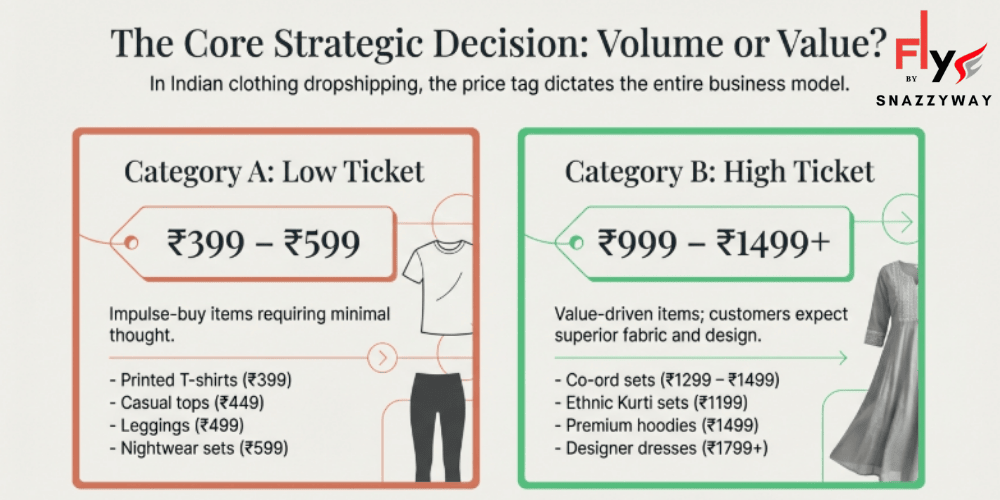
This decision directly impacts:
- Profit margins
- Return rates
- COD risk
- Advertising cost
- Cash flow stability
In this detailed guide, we will compare High Ticket vs Low Ticket clothing dropshipping using real Snazzyway product ranges , simple numbers, and practical experience.
Understanding Ticket Size in Clothing Dropshipping
The choice between low-ticket and high-ticket products becomes clearer when sellers understand how dropshipping works on platforms like Shopify and how margins behave there.
What Is Low-Ticket Clothing?
Low-ticket products are impulse-buy items that cost less and require minimal thinking.
Snazzyway Low-Ticket Examples:
- Printed T-shirts – ₹399
- Casual tops – ₹449
- Leggings – ₹499
- Nightwear sets – ₹599
What Is High-Ticket Clothing?
High-ticket clothing includes value-driven or premium items where customers expect better fabric, design, and finishing.
Snazzyway High-Ticket Examples:
- Co-ord sets – ₹1299–₹1499
- Ethnic kurti sets – ₹1199
- Premium hoodies – ₹1499
- Designer dresses – ₹1799+
₹399 vs ₹1499 – Price Comparison Reality
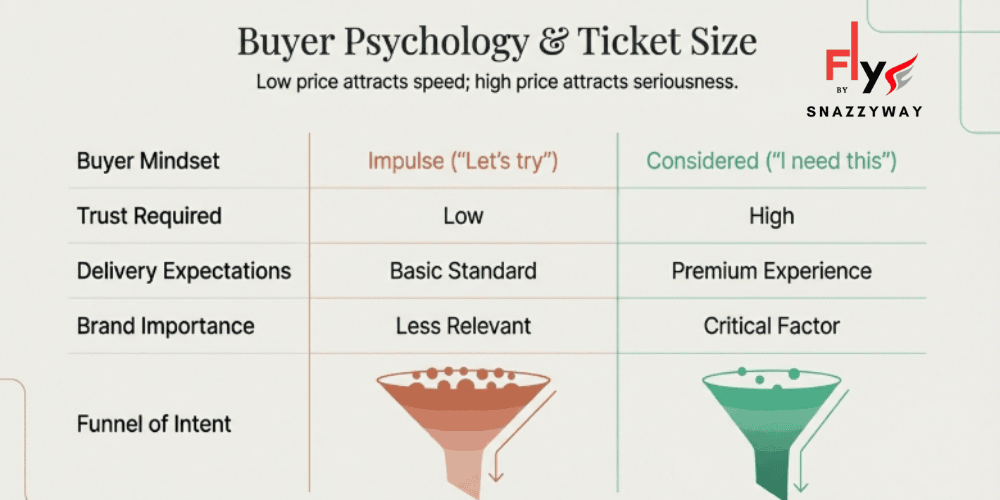
👉 Key insight :
Low price attracts faster orders, but high price attracts serious buyers .
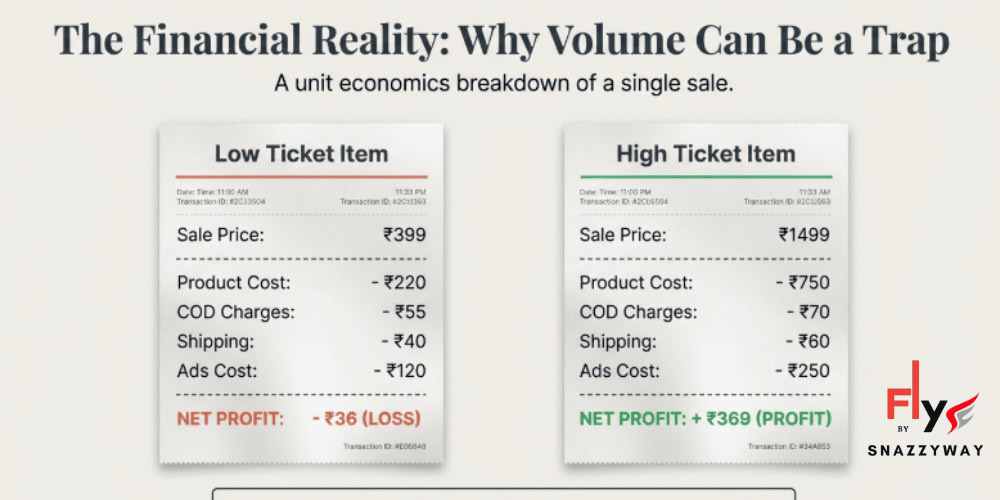
Profit Margin Comparison (Snazzyway Data Example)
Low-Ticket Product (₹399)
👉 Many sellers don’t calculate this properly because they haven’t learned how to identify profitable dropshipping products beyond just selling price..
High-Ticket Product (₹1499)
✅ High ticket gives room to breathe, even if ads fluctuate.
Return Rates – The Silent Profit Killer
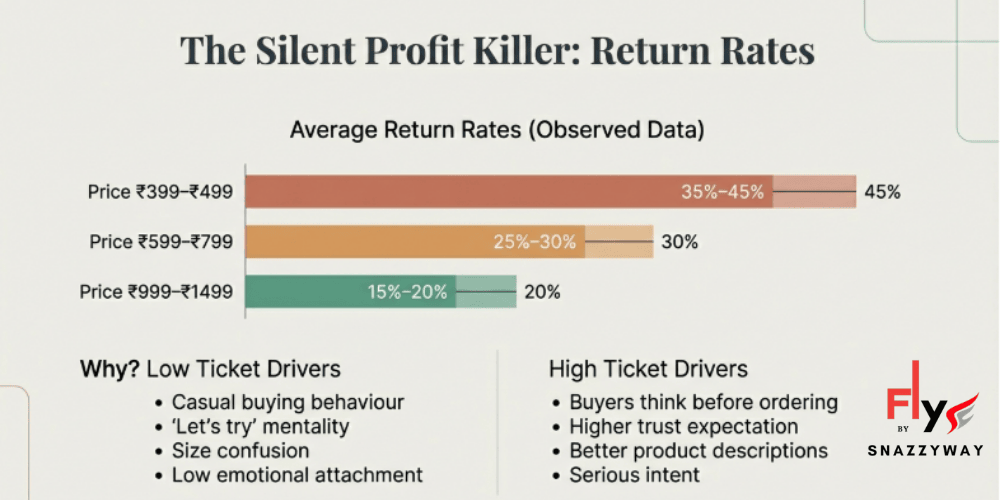
Average Return Rates (Observed Across Snazzyway Sellers)
Why Low-Ticket Has More Returns?
- Casual buying behavior
- “Let’s try” mentality
- Size confusion
- Low emotional attachment
Why High-Ticket Returns Are Lower?
- Buyers think before ordering
- Higher trust expectation
- Better product descriptions
- More serious intent
COD Risk – Reality in Indian Dropshipping
Before offering Cash on Delivery, sellers should clearly understand whether COD actually makes sense in Indian dropshipping for their ticket size.
COD (Cash on Delivery) is powerful—but risky.
COD Risk Comparison
👉 Snazzyway insight :
High-ticket COD orders show better delivery confirmation rates when WhatsApp or IVR verification is used.
Ad Cost Ratio – Where Most Sellers Lose Money
Facebook/Instagram Ads Reality
Example ROAS
👉 Low-ticket ads look good on the dashboard, but profits don’t show up in bank accounts — especially when sellers ignore current dropshipping trends and margin shifts .
Operational Load Comparison
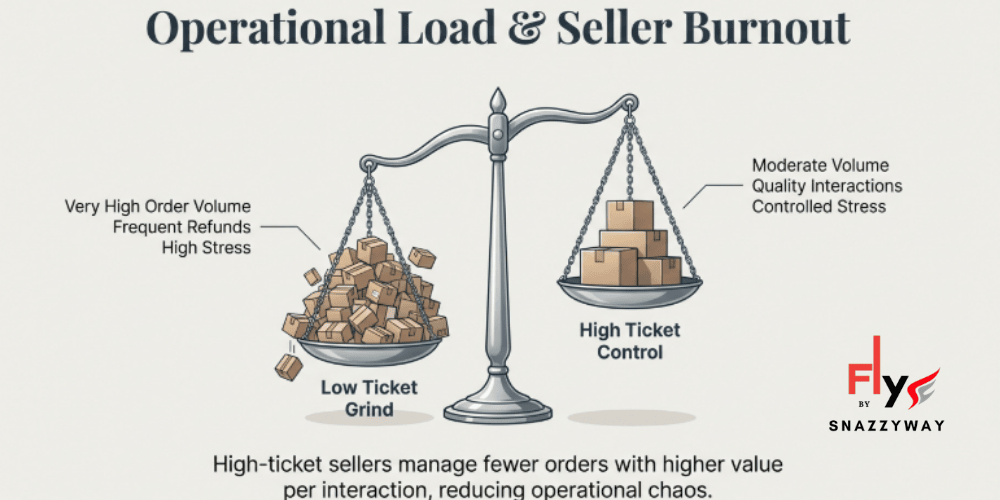
High-ticket sellers manage fewer orders with higher value , reducing chaos.
Pros & Cons Breakdown
✅ Low-Ticket Clothing – Pros
- Easy to sell
- Fast order flow
- Beginner-friendly
- Lower customer resistance
❌ Low-Ticket Clothing – Cons
- Thin or negative margins
- High return rates
- Heavy COD losses
- Difficult to scale profitably
✅ High-Ticket Clothing – Pros
- Strong margins
- Lower return rates
- Better customer quality
- Sustainable scaling
❌ High-Ticket Clothing – Cons
- Requires trust-building
- Better creatives needed
- Slightly higher ad cost
- Product presentation matters
Which One Is Better for You?
Choose Low-Ticket If:
- You are testing ads
- You want market understanding
- You’re learning order processing
- You’re okay with low margins initially
Choose High-Ticket If:
- You want long-term profitability
- You understand ads basics
- You want brand positioning
- You prefer quality over quantity
👉 Many successful Snazzyway sellers start low-ticket and transition to high-ticket within 3–6 months .
Snazzyway Seller Insight (Real-World Observation)
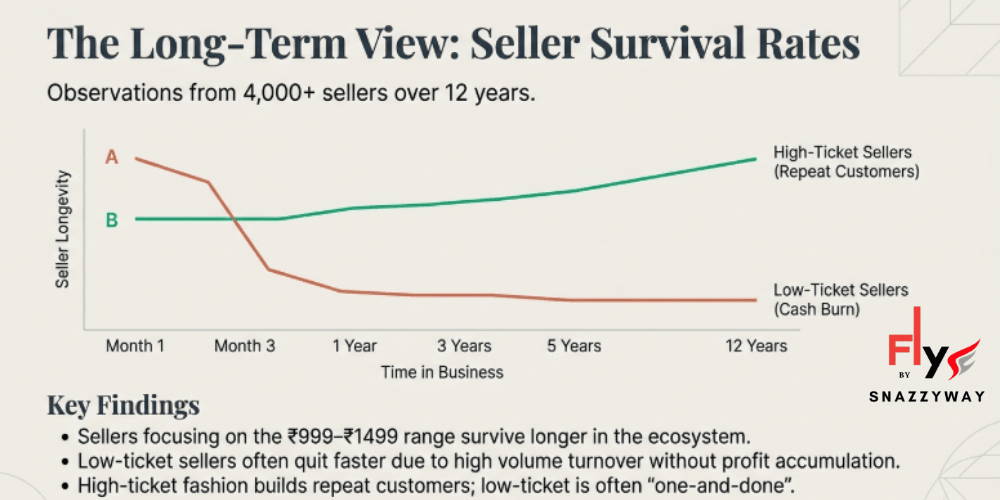
After working with 4000+ sellers over 12+ years, Snazzyway data shows: consistent patterns in seller performance. These outcomes become clearer when you understand how Snazzyway’s dropshipping system works at an operational level:
- Sellers selling ₹999–₹1499 products survive longer
- Low-ticket sellers quit faster due to cash burn
- Hybrid stores (low + high ticket) perform best
- High-ticket fashion builds repeat customers
Smart Hybrid Strategy (Recommended)
This reduces risk and increases profit.
Final Verdict – Which Is More Profitable?
🎯 Final answer:
High-ticket clothing dropshipping is more profitable in India when done with the right supplier and systems.
Your Questions Answered
Low-ticket clothing priced around ₹399 can still be useful for product testing, but long-term profitability is often difficult due to advertising costs, logistics expenses, and higher return rates.
Yes. Customers are more comfortable placing higher-value COD orders when product images, size charts, reviews, and brand communication are clear and trustworthy.
Yes. Beginners can successfully sell higher-value products, especially when working with reliable suppliers and platforms that manage quality control and fulfillment efficiently.
Products priced between ₹999 and ₹1499 often provide the best balance between profit margin, buyer trust, and conversion rates.
No. Low-ticket products can still be useful for attracting customers or testing demand, but they should not be the only revenue model in a dropshipping store.