How to Scale Amazon Dropshipping in India Safely (Step-by-Step 2026 Guide)
Scaling an Amazon dropshipping business in India can be highly profitable—but only if you do it safely and systematically . Many sellers fail not because dropshipping doesn’t work, but because they scale too fast, ignore Amazon policies, or depend on unstable suppliers.
If you already understand the basics of Amazon dropshipping, this guide will help you scale your business without risking account suspension, cash-flow problems, or supplier failures.
This article is designed as a supporting resource , focusing only on safe growth strategies , advanced systems, and long-term sustainability.
Why Scaling Amazon Dropshipping in India Is Risky (If Done Wrong)

Before we talk about growth, it’s important to understand why Amazon sellers get banned during scaling :
Scaling safely means reducing risk while increasing volume , not just increasing sales.
Step 1: Strengthen Your Foundation Before Scaling
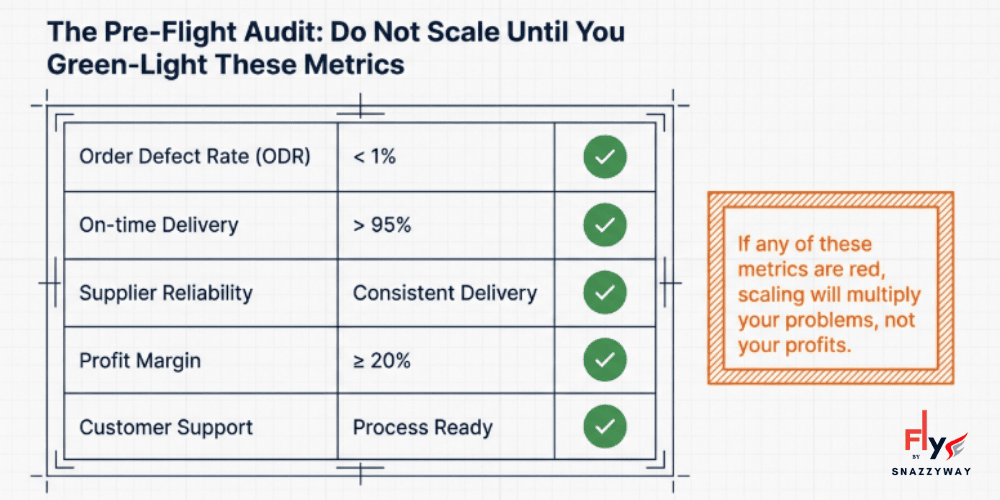
Scaling should only start after these conditions are met:
If any of these are weak, scaling will multiply problems—not profits.
Step 2: Shift from Random Products to Data-Driven Winners

When scaling, product selection matters more than ever .
What Products Scale Safely on Amazon India?
- Everyday utility products
- Fashion basics (low returns)
- Home improvement accessories
- Office & workspace items
- Non-fragile, lightweight products
Avoid:
- Electronics
- Branded items
- Fragile or liquid products
If you’re exploring clothing as a niche, this page explains profitable categories and trends very clearly:
Step 3: Build a Supplier System (Not Just a Supplier)

At small scale, one supplier may work. At scale, you need a system .
Safe Supplier Scaling Model
Using a structured platform like Snazzyway Dropshipping reduces risk by offering:
- Pre-verified suppliers
- Faster dispatch
- Invoice & compliance support
Step 4: Automate Order Processing to Avoid Account Flags

Manual order placement becomes dangerous at scale.
What to Automate First
Automation reduces human error—which Amazon penalizes heavily.
Step 5: Control Cash Flow (Most Sellers Fail Here)

High sales ≠ high profit.
Safe Cash-Flow Rule for Scaling
Never scale using 100% of your balance
If you also sell via Shopify alongside Amazon, understanding payment cycles helps a lot. This guide explains it well:
Step 6: Use Ads Carefully (Don’t Burn Accounts or Cash)

Amazon PPC is powerful—but dangerous when misused.
Safe Amazon PPC Scaling Strategy
Golden rule:
If organic orders are unstable, ads will magnify losses
Step 7: Expand Catalog Slowly (Horizontal Scaling)

Instead of pushing one product to extreme volume:
- Add variations (size, color, bundle)
- Add related products
- Stay within same niche
This keeps your account behavior natural in Amazon’s system.
Step 8: Cross-Platform Scaling for Stability

Many advanced sellers combine Amazon + Shopify to reduce dependency.
If you want to understand Shopify dropshipping fundamentals, these guides help without overlapping Amazon content:
Step 9: Stay 100% Amazon Policy Compliant While Scaling
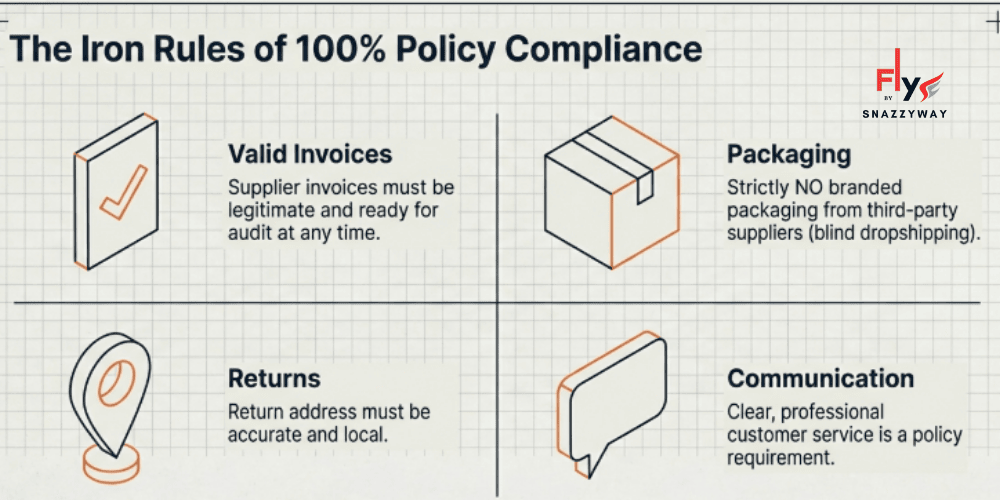
Amazon suspensions usually happen during growth phases.
Key Rules to Never Break
- Supplier invoices must be valid
- No branded packaging from suppliers
- Accurate return address
- Clear customer communication
For profit expectations and policy clarity, these rules are to be followed .
Scaling Timeline (Realistic Expectation)
Your Questions Answered
Scaling Amazon dropshipping in India safely requires four things to happen in sequence — not simultaneously. First, validate your supplier before scaling: place test orders, verify neutral packaging, confirm GST invoice format, and check actual delivery timelines to multiple pin codes. Second, stabilize your account health metrics — keep Order Defect Rate below 1%, Late Shipment Rate below 4%, and Cancellation Rate below 2.5% — before adding new SKUs. Third, scale horizontally by adding proven product variations within your existing category rather than jumping into unrelated categories, which resets your listing authority. Fourth, automate order forwarding and tracking sync before volume increases — manual processes that work at 20 orders per day break at 200. Sellers who skip validation and automate too late are the ones who get suspended during their first high-volume period.
Amazon seller account suspensions during dropshipping scale-up happen for three predictable reasons — and all three are preventable. The first is Late Shipment Rate breaches: when order volume spikes during sales events and the supplier cannot dispatch within 24 hours, late shipments accumulate rapidly. Prevention requires confirming your supplier's peak-period dispatch capacity before running promotions. The second is packaging policy violations: as volume grows, some suppliers cut corners and ship with their own branding or packing slips — a direct policy breach. Prevention requires periodic spot-checks on live orders. The third is a sudden spike in return rates or negative feedback from a new SKU that was never tested at small scale. Prevention requires a test-and-validate phase for every new product before bulk listing. Working with a single controlled supplier like Snazzyway — rather than multiple open-market vendors — significantly reduces all three suspension risks because fulfillment consistency is maintained centrally.
The right scaling sequence for Amazon dropshipping listings in India is depth before breadth. Start with 10–20 tightly focused SKUs in one subcategory — for example, women's cotton bras in specific size ranges — and optimize each listing fully before expanding. Once those listings achieve stable sales velocity and positive review accumulation, expand to adjacent SKUs within the same category. Avoid the common mistake of listing 500+ products across unrelated categories early on — this spreads your advertising budget thin, creates account health complexity across multiple product types, and makes it harder to identify which supplier issues are causing return spikes. A focused catalog of 50–100 well-optimized, high-margin SKUs from a controlled supplier consistently outperforms a sprawling 1,000-product catalog from an open marketplace on Amazon India.
GST compliance becomes more complex — and more scrutinized — as Amazon dropshipping volume grows in India. GST registration is mandatory for all Amazon India sellers regardless of turnover threshold, since Amazon itself requires it at onboarding. When scaling, three GST issues commonly arise. First, invoice mismatch: your supplier's GST invoice must be in your business name as the seller of record — invoices showing the supplier's name reaching the end customer violates Amazon's policy. Second, GSTR-1 reconciliation: as order volume grows, monthly GST filings must reconcile with your Amazon sales reports — discrepancies trigger notices. Third, HSN code accuracy: fashion and lingerie products have specific HSN codes with defined tax rates; incorrect codes on invoices create liability during audits. Working with a supplier who issues standardized, GST-compliant invoices in your seller name for every order eliminates the first problem and simplifies the second two.
Protecting Amazon account health while scaling dropshipping requires treating your Account Health Dashboard as a daily operational instrument — not a weekly review. The three metrics that most commonly breach during scale-up are Order Defect Rate (ODR), Late Shipment Rate (LSR), and Valid Tracking Rate (VTR). To protect ODR: respond to all buyer messages within 24 hours, process return requests immediately, and proactively refund clearly defective items rather than waiting for A-to-Z claims. To protect LSR: confirm dispatch cutoff times with your supplier and build a one-day buffer — if your supplier dispatches by 12 PM, your Amazon handling time should be set to 2 days, not 1. To protect VTR: ensure your supplier provides courier tracking numbers that are uploaded to Amazon before the expected ship date — platforms like Snazzyway Fly automate tracking sync, removing the manual step that most commonly causes VTR drops when volume increases.
The right time to transition from Amazon dropshipping to FBA in India is when a specific product — not your whole catalog — has demonstrated three things: consistent sales velocity over at least 60–90 days, stable positive review accumulation with low return rates, and sufficient margin to absorb FBA storage fees, fulfillment fees, and the capital cost of pre-stocking inventory. FBA gives access to Prime badging and faster delivery, which typically lifts conversion rates by 15–30% on proven listings. The hybrid approach works best: keep new and unproven SKUs on dropshipping to test demand without capital risk, and shift validated bestsellers to FBA for Prime eligibility and better Buy Box positioning. Switching your entire catalog to FBA before validating products is one of the most common and costly mistakes Amazon India sellers make when scaling.
The highest-impact actions for increasing Amazon dropshipping sales in India during scale-up are listing quality improvement, review velocity, and strategic advertising — in that order. Listing quality: ensure your title contains the primary keyword in the first 60 characters, your bullet points address the top three buyer objections for that category, and your main image meets Amazon's white-background and minimum 1000px requirements. Review velocity: more reviews improve organic ranking faster than any other single factor — follow up with buyers using Amazon's Request a Review button within 4–30 days of delivery. Advertising: start with Sponsored Products on exact-match keywords for your top 10 SKUs before broadening — broad match at scale wastes budget on irrelevant traffic. For fashion and lingerie categories specifically, A+ Content with size guides and fabric detail images measurably reduces return rates and increases conversion, making it a high-ROI scaling investment.
Return management becomes the single biggest operational challenge when scaling Amazon dropshipping in India, particularly in fashion and apparel categories where return rates of 15–25% are normal. An effective return system at scale requires three things. First, a supplier with a structured return processing workflow — they must accept returned inventory, assess condition, and provide replacements or credits on a defined timeline. Second, a return rate monitoring system by SKU — returns are never uniform across a catalog, and identifying the 10–15% of SKUs causing 60–70% of returns allows you to delist or improve those listings before they damage your account health. Third, pre-emptive listing improvements for high-return SKUs: adding detailed size charts, accurate fabric descriptions, and real customer fit photos reduces size-related and expectation-related returns without requiring supplier changes. Snazzyway's Fly dashboard provides return tracking by SKU, enabling sellers to identify problem products before return rates breach Amazon's thresholds.