Shopify vs Amazon FBA in India (2026): Which Is Better for Dropshipping?
Quick Answer
Is Shopify or Amazon FBA better for dropshipping in India?
The answer depends on your business goals.
- Shopify is better for building a long-term brand, controlling customer experience, and creating higher profit margins.
- Amazon FBA is better for faster sales, marketplace trust, and easier access to ready-to-buy customers.
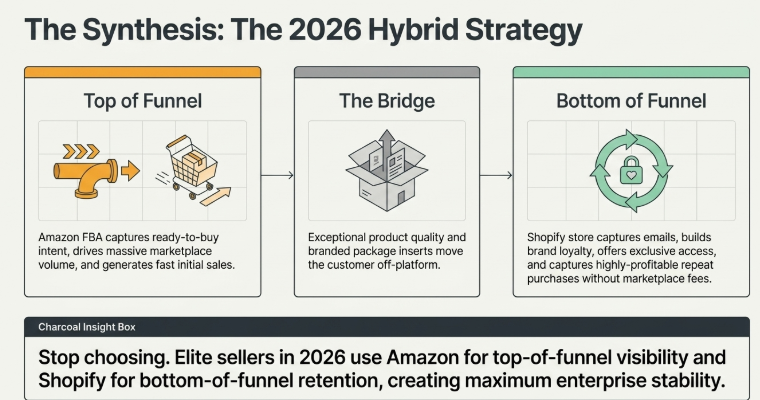
In 2026, many successful ecommerce sellers are combining both platforms instead of choosing only one. They use Amazon for traffic and Shopify for brand building.
This is also why reliable fulfillment and supplier systems are becoming increasingly important for modern ecommerce businesses.
Introduction
One of the biggest questions ecommerce sellers ask in 2026 is:
Should I start with Shopify or Amazon FBA?
Both platforms are massive opportunities for dropshipping and ecommerce businesses in India.
But they work very differently.
Choosing the wrong platform can create problems like:
- High ad costs
- Low profit margins
- Marketplace dependency
- Weak branding
- Customer acquisition struggles
At the same time, choosing the right platform can help sellers:
- Build long-term brands
- Scale profitably
- Create repeat customers
- Improve operational stability
This is why understanding the difference between Shopify and Amazon FBA is extremely important before starting your ecommerce business.
Many beginners entering ecommerce today prefer business models with faster fulfillment, better branding support, and simpler operational management. Sellers planning to build their first online store can also understand the process better through this guide on how to start dropshipping on Shopify.
In this guide, we’ll compare Shopify vs Amazon FBA in India across pricing, branding, traffic, profitability, scalability, and dropshipping suitability.
What Is Shopify?
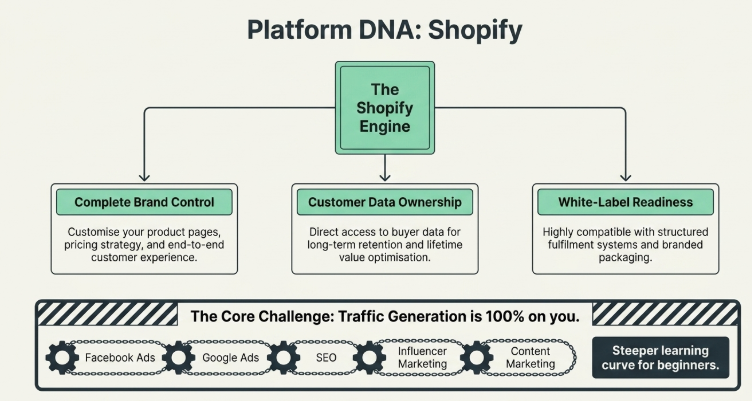
Shopify is a platform that allows you to create your own ecommerce website.
With Shopify, you control:
- Your branding
- Your customer data
- Your product pages
- Your pricing
- Your marketing strategy
Shopify is mainly used by sellers who want to build long-term ecommerce brands instead of depending entirely on marketplaces.
What Is Amazon FBA?
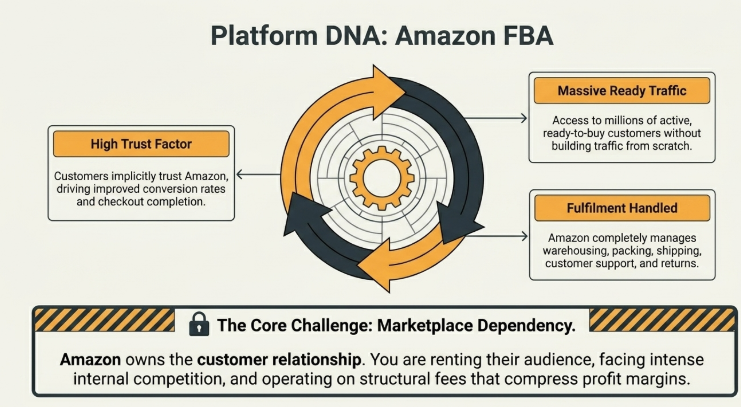
Amazon FBA (Fulfillment by Amazon) allows sellers to list products on Amazon while Amazon handles:
- Warehousing
- Packing
- Shipping
- Customer support
- Returns
Amazon already has massive customer traffic, which makes it attractive for beginners.
However, marketplace competition is also extremely high.
Sellers wanting to understand marketplace-based selling models can also explore this complete guide on Amazon dropshipping in India.
Shopify vs Amazon FBA: Core Difference
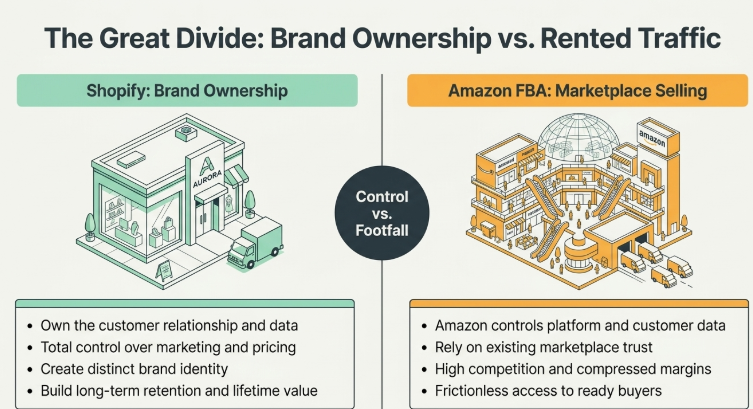
Shopify = Brand Ownership
With Shopify:
- You own the customer relationship
- You control marketing
- You create your own brand identity
- You can build long-term customer retention
Amazon FBA = Marketplace Selling
With Amazon:
- Amazon controls the platform
- Customers trust Amazon more than individual sellers
- Competition is higher
- Profit margins are usually lower
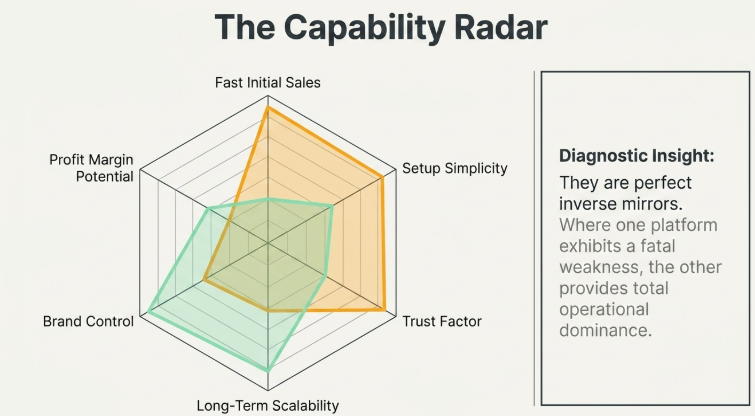
Shopify vs Amazon FBA Comparison Table
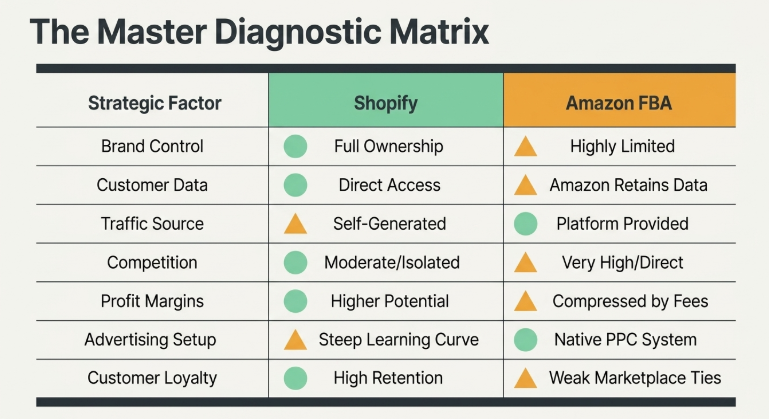
| Factor | Shopify | Amazon FBA |
|---|---|---|
| Brand Control | Full | Limited |
| Customer Ownership | Full | Amazon Owns Customer Data |
| Traffic | You Generate Traffic | Amazon Provides Traffic |
| Competition | Moderate | Very High |
| Profit Margins | Higher Potential | Lower Due to Fees |
| Trust Factor | Must Build | Already Established |
| Long-Term Branding | Excellent | Limited |
| Scalability | High | High |
| Advertising Costs | Can Be High | Competitive PPC |
| Customer Loyalty | Stronger | Weak Marketplace Loyalty |
Why Shopify Is Growing Rapidly in India
1. Brand Building Opportunity
Modern ecommerce is shifting from simple product selling toward long-term brand creation.
Shopify allows sellers to:
- Create premium stores
- Control customer experience
- Improve repeat purchases
- Build brand trust
This is one reason many fashion sellers now prefer Shopify.
2. Better Profit Margins
With Shopify, sellers avoid many marketplace fees.
This often creates:
- Better long-term margins
- More pricing flexibility
- Better customer lifetime value
3. White Label & Branding Advantages
Branding is becoming one of the biggest ecommerce advantages in 2026.
Shopify works extremely well with white label fulfillment systems.
Many sellers now use structured fulfillment and branded packaging instead of generic dropshipping models. Businesses wanting to understand this system better can explore this guide on white label dropshipping.
Why Amazon FBA Still Works Well
1. Ready Customer Traffic
Amazon already has millions of active buyers.
This means sellers do not always need to build traffic from scratch.
For beginners, this can simplify early sales generation.
2. Higher Customer Trust
Customers already trust Amazon.
This improves:
- Conversion rates
- Purchase confidence
- Checkout completion
3. Faster Initial Sales Potential
Many sellers generate sales faster on Amazon compared to starting a completely new Shopify store.
However, scaling profitability long-term can become more difficult because of competition and rising fees.
The Biggest Problem With Amazon FBA
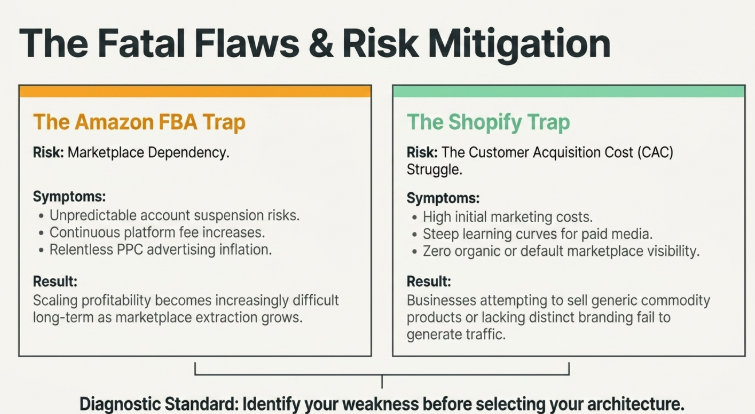
Marketplace Dependency
One major risk is dependency on Amazon.
Problems include:
- Account suspension risks
- Increasing competition
- PPC advertising inflation
- Fee increases
- Limited brand control
This is why many experienced sellers eventually build Shopify stores alongside Amazon operations.
The Biggest Problem With Shopify
Traffic Generation
Shopify gives freedom, but traffic generation becomes your responsibility.
You must manage:
- Facebook Ads
- Google Ads
- SEO
- Influencer marketing
- Content marketing
This creates a steeper learning curve for beginners.
Which Platform Is Better for Dropshipping?
Shopify for Dropshipping
Shopify is usually better for:
- Long-term brand building
- Fashion ecommerce
- White label products
- Customer retention
- Higher-margin businesses
Especially in women’s fashion, Shopify stores often scale better because branding plays a huge role in customer trust.
Amazon for Dropshipping
Amazon works better for:
- Faster initial sales
- Marketplace-based selling
- Commodity products
- Lower marketing complexity
However, strict policies and competition make long-term scaling harder.
Why Supplier Quality Matters on Both Platforms
Regardless of platform, supplier reliability directly impacts:
- Product consistency
- Delivery speed
- Customer satisfaction
- Reviews
- Refund rates
This is why sellers increasingly prefer organized fulfillment systems instead of random sourcing models.
Sellers searching for reliable women’s fashion sourcing partners often prefer suppliers with long-term operational experience and stable fulfillment systems. Learn more about clothing dropshipping suppliers in India and how modern fashion fulfillment works.
Common Ecommerce Challenges in 2026
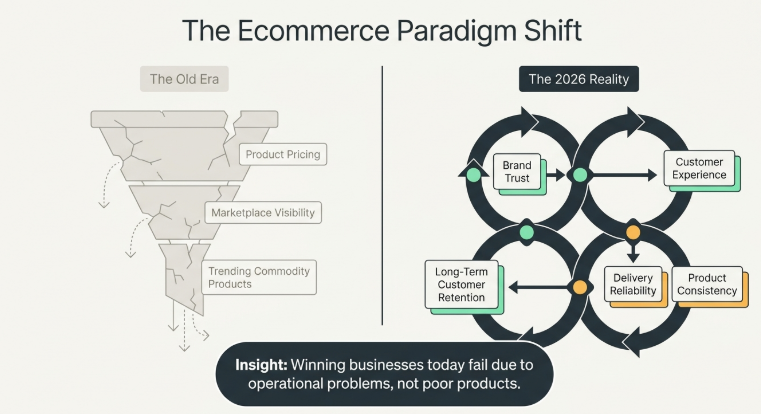
Most ecommerce businesses fail because of operational problems, not because of poor products.
Common issues include:
- Delayed fulfillment
- Inventory instability
- Weak branding
- High return rates
- Poor customer experience
Many beginners underestimate these scaling problems. Understanding these operational challenges early through this guide on major dropshipping challenges and solutions can help avoid costly mistakes.
Why Many Fashion Sellers Prefer Shopify
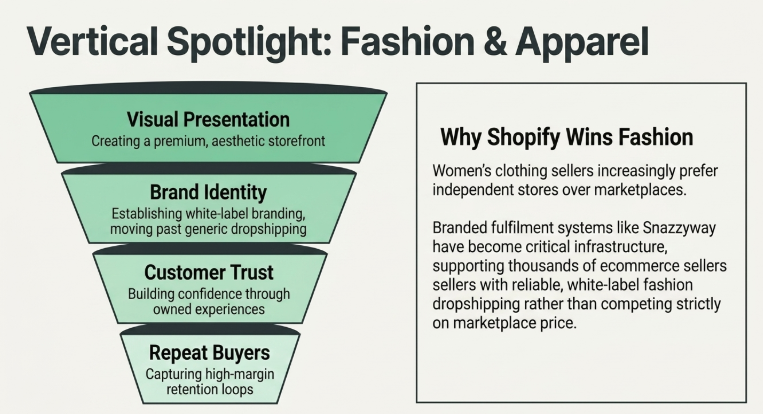
Fashion ecommerce depends heavily on:
- Brand identity
- Visual presentation
- Customer trust
- Repeat buyers
Shopify allows sellers to create stronger fashion brands compared to marketplace-only selling.
This is one reason many women’s clothing sellers now prefer independent ecommerce stores over depending completely on Amazon marketplaces.
For example, companies like Snazzyway have become popular among fashion sellers because they support branded fulfillment systems and work with thousands of ecommerce sellers in the women’s clothing segment.
International Growth Opportunities
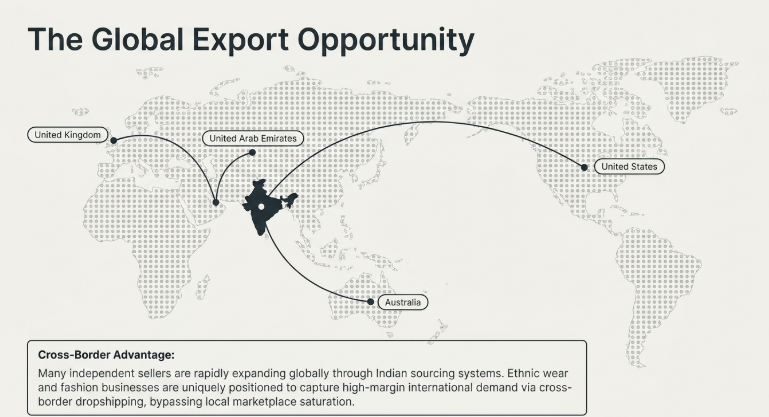
Many Shopify sellers are now expanding globally through Indian sourcing systems.
Popular international markets include:
- UK
- UAE
- USA
- Australia
Fashion and ethnic wear businesses especially benefit from international demand.
Businesses interested in overseas ecommerce growth can also read this detailed guide on dropshipping from India to the UK.
Pros and Cons
Shopify Pros
- Full brand ownership
- Better customer retention
- Higher long-term profitability
- Better customization
- Easier white labeling
Shopify Cons
- Requires traffic generation
- Learning curve for beginners
- Marketing costs can be high
Amazon FBA Pros
- Massive customer traffic
- Higher trust factor
- Easier initial selling
- Faster order generation
Amazon FBA Cons
- Lower margins
- High competition
- Marketplace dependency
- Limited customer ownership
Our Recommendation
| Business Goal | Better Platform |
|---|---|
| Long-Term Brand Building | Shopify |
| Fast Initial Sales | Amazon FBA |
| White Label Ecommerce | Shopify |
| Marketplace Selling | Amazon FBA |
| Customer Retention | Shopify |
| Fashion Ecommerce | Shopify |
| Beginner Simplicity | Amazon FBA |
| Long-Term Scalability | Shopify |
For most serious ecommerce businesses in 2026, Shopify provides better long-term growth potential because it allows sellers to build real brands instead of depending entirely on marketplaces.
Our Insight
The ecommerce industry is changing rapidly.
Winning businesses today are no longer competing only on:
- Product pricing
- Marketplace visibility
- Trending products
Instead, they compete on:
- Brand trust
- Customer experience
- Delivery reliability
- Product consistency
- Long-term customer retention
That’s why many successful ecommerce sellers now use a hybrid strategy:
- Amazon for visibility and sales
- Shopify for branding and retention
This creates a more stable long-term business model.
Final Thoughts
Shopify and Amazon FBA are both powerful ecommerce models.
But they serve different business goals.
Choose Shopify if you want:
- Brand ownership
- Long-term scalability
- Better customer retention
- Higher business valuation potential
Choose Amazon FBA if you want:
- Faster access to customers
- Easier early sales
- Marketplace-driven growth
In 2026, the strongest ecommerce businesses are usually the ones that combine operational reliability, strong branding, and scalable fulfillment systems.
FAQs
Is Shopify better than Amazon FBA in India?
Shopify is usually better for long-term brand building, while Amazon FBA is better for faster marketplace sales.
Can I do dropshipping with Shopify in India?
Yes. Shopify is one of the most popular platforms for dropshipping and white label ecommerce businesses in India.
Is Amazon FBA profitable in India?
Yes, but profit margins can become lower because of competition and marketplace fees.
Which platform is better for fashion ecommerce?
Shopify is generally better for fashion ecommerce because branding and customer experience matter heavily in this category.
Can I use both Shopify and Amazon together?
Yes. Many successful sellers use Amazon for traffic and Shopify for brand building.
What is the biggest advantage of Shopify?
The biggest advantage is full control over branding, customer experience, and long-term business growth.
What is the biggest risk with Amazon FBA?
Marketplace dependency is the biggest risk because Amazon controls policies, visibility, and customer relationships.
Why is branding becoming important in ecommerce?
Modern ecommerce customers prefer trusted brands with better experiences, faster delivery, and professional fulfillment systems.